Parākramabāhu I and the creation of the Gal Vihara inscription

The Chola invasions of the 11th century inflicted a devastation upon Sri Lanka, from which it almost did not recover. The Śaivite Tamil emperors Rājarāja I and his son Rājendra I, patrons of Śaivism, viewed the Sinhalese Buddhist kingdom as not only a commercial rival but also as a target for imperial expansion. Their armies swept across the Palk Strait and fell upon Anurādhapura, the ancient capital of the Sinhalese Kingdom, which had stood as the citadel of Theravāda Buddhism for over a millenia. The city was brutally sacked. Monasteries were burned, stūpas were desecrated and looted, and the great libraries, repositories of generations of Pāli scholarship, were mercilessly set aflame. The Mahāvihāra, the most ancient and revered monastic institution, was reduced to rubble. Thousands of bhikkhus and laypeople were killed or fled for their lives, and for 77 years the Cholas ruled the northern half of the island as a province of their empire. They administered it from the newly established city of Polonnaruwa, which they deemed to have a more defensible position, after completely decimating Anurādhapura.

Yet even in the midst of this catastrophe, the flame of the Dhamma was not entirely extinguished. As the Chola armies advanced, many bhikkhus gathered what manuscripts they could carry and fled southward into the rugged and heavily forested region of Ruhuṇa. Here, sheltered by jungle and distance from the centers of Chola power, they found relative safety, and they preserved the texts that would prove essential for the eventual restoration of the Sāsana. These refugees established temporary monastic settlements, copying and recopying the fragile palm-leaf manuscripts by hand, maintaining the unbroken lineage of the Buddha’s teaching. The Tipiṭaka, the three baskets of the Pāli canon, survived in these hidden refuges, along with the ancient Commentaries that preserved the interpretive traditions of the Mahāvihāra which we have today. It was a holding action, and a desperate attempt to keep the light burning until better days should dawn.

The restoration of Sinhalese power began in 1070 when Vijayabāhu I, a prince of the royal blood, rallied the forces of Ruhuṇa and, after years of guerrilla warfare, finally expelled the Cholas from the island. He established a new capital at Polonnaruwa, the very city the invaders had built, and set about the work of reconstruction. But the political unity of Lanka remained very fragile, and it was not until the mid-12th century that a monarch of sufficient vision and strength arose to complete the task. Parākramabāhu I, through a series of courageous campaigns, brought the entire island under his sole authority for the first time in nearly two centuries. Having unified the secular realm, he then turned his attention to the condition of the Saṅgha, which he found fractured, demoralized, and in desperate need of reform. The stage was now set for one of the most significant religious councils in Theravāda history.

In 1164 or 1165, Parākramabāhu convened a great council of the monastic community, summoning the most respected elders from across the island. Chief among them was Mahākassapa Thera of Udumbaragiri, a forest-dwelling bhikkhu renowned for his strict adherence to the Vinaya and deep learning. The King, acting in the tradition of great Buddhist emperors like Asoka, placed his royal authority at the service of the elder’s spiritual judgment. The council’s decision was radical: the three fraternities were to be dissolved, and their members merged into a single, unified Saṅgha under the sole authority of the Mahāvihāra. A comprehensive purification was then carried out. Bhikkhus found to be living in violation of the Vinaya—those who were married, who engaged in trade, who refused to follow the rules—were summarily defrocked. Those deemed worthy were permitted to remain and were, in many cases, re-ordained to ensure the absolute purity of the lineage.

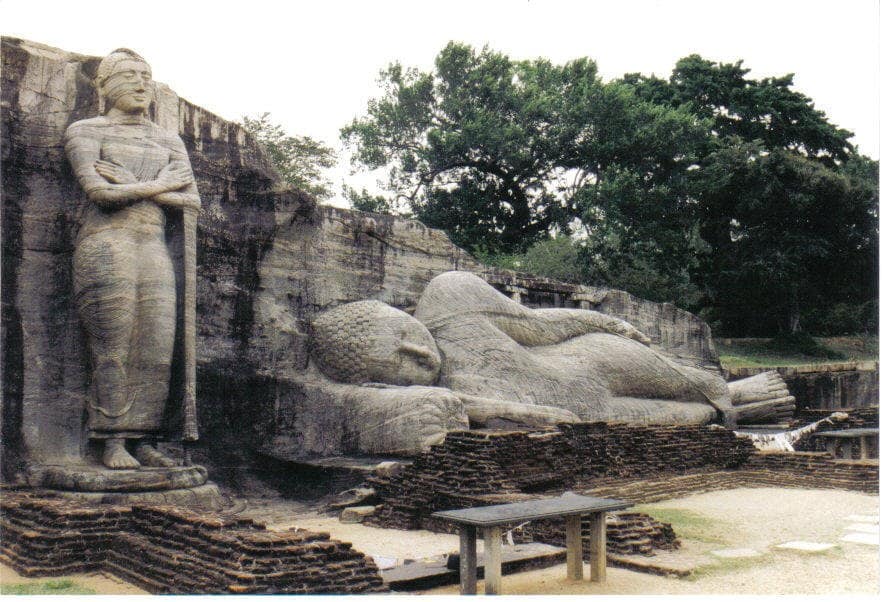
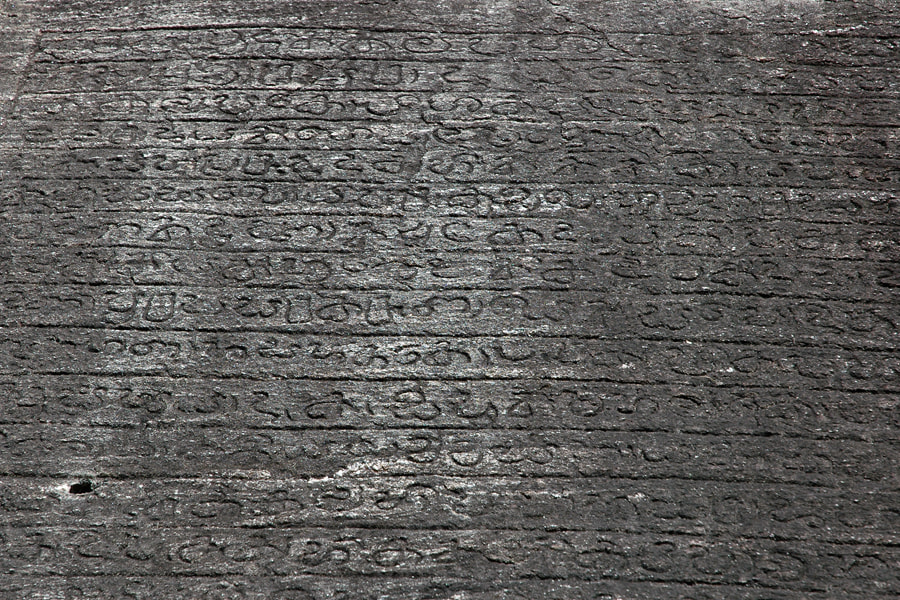
The reforms were codified in a detailed inscription carved into rock at Gal Vihāra, which survives to this day, and which is a very important Buddhist historical monument. This consequential edict functioned as a kind of constitution for the Saṅgha going forward, prescribing the duties of bhikkhus in detail: their obligations to study the scriptures, to practice meditation, to maintain proper deportment, and to avoid association with the wrong people and the distractions of worldly life. It also established a clear hierarchy of authority and a system of penalties for transgressions. The Polonnaruwa reform was a well-needed purge, which helped reset the direction of the monastic order.

The unified and purified Saṅgha established by King Parākramabāhu became the standard for Theravāda Buddhism throughout Southeast Asia, and its lineage would later be sought by kingdoms in Burma and Siam seeking to revive their own traditions. The king had not only saved the Sinhalese Saṅgha from dissolution; he had ensured its continuity for centuries, possibly millennia, to come. Here is a short excerpt from the inscription which the scribes carved into the rock-face:

“After one thousand seven hundred and fourteen years had elapsed from that time, beginning from the days of King Vaṭṭagāmaṇi Abhaya, the Dispensation, having become split into fraternities of different views, was continuing to decline. Then the Great King Parākramabāhu, the Lord of Men, the Overlord of Kings, descended from the Great Elect, the first king, and sprung from the Solar Race, whose fame shone forth with great effulgence, was anointed with the supreme kingship over all Laṅkā. While he was dwelling enjoying royal happiness, his merit being abundantly expanded, he saw those who had gone forth into the Dispensation, sons of good family, sunk in the ocean of the evil states, stricken by the poison of wrong conduct and bad behavior rooted in ignorance and lack of wisdom. He thought: “If I, who am an emperor of authority in the supremely pure Buddha Dispensation, should remain indifferent seeing this kind of defilement, the Buddha’s Dispensation would perish and many beings would fall into the evil states. Surely I ought to be a servant to the Dispensation which has endured for two thousand five hundred years.” Thus, with compassion prompted by wisdom, inciting his heart, he acted thus: He thought, “Having made the virtuous monks who are the ornament of the Dispensation my agents, having removed the stains, how shall I cause the Dispensation to endure in the manner in which it has done for two thousand five hundred years?”

Having seen the community of monks dwelling in the Mahāvihāra, headed by the Great Elder Mahā-Kassapa, resident of Udumbaragiri, adorned and decorated with the jewel-ornaments of virtues pertaining to this life such as the body of moral conduct, etc., guarded, increased, and fostered, being provided with the various qualities of unbroken and uninterrupted tradition, etc., and having made them his agents, just as the Great King Dhammāsoka, making the God-appointed Buddha-Kappa Elder Moggaliputta-Tissa his agent, crushed the wicked monks, rooted out the evil doctrines, purified the Dispensation, and held the Third Council, so this king, removing many hundreds of wicked monks from the Master’s Dispensation, when there were monks possessed of the six super-knowledges and many other qualities, great saints, caused them to be brought together, and united the three fraternities which former kings had not been able to unite with great effort, into one united body. He caused many great and important monasteries, such as the Jetavana Mahāvihāra, to be built in various places in Laṅkā, and caused the great community, exceeding a thousand in number, to dwell there. He attended to them with the continual gift of the material needs of the Dhamma. Delighting in the taste of joy and happiness arising from seeing the community, at the proper seasons, having undertaken the eight precepts, he would go to the monastery, and seated in the midst of the assembled community, he would taste the joy and happiness arising from that sight. (He reflected:) “May this unity of the community, which has been accomplished by me with great effort, continue unbroken for two thousand five hundred years, and may the future community, being diligent, devoted to the two duties of study and meditation, endowed with the virtue of fewness of wishes, etc., dwell in the proper manner, and having given counsel and instruction, protect the Dispensation.”

(The inscription continues):

“Having heard this reasonable, lucid, and virtuous request, the Great Elder Mahā-Kassapa and the other eminent elders, in order that there might be no opportunity for those who dwell in negligence, compared the Dhamma and the Vinaya, and without exceeding the bounds, laid down the following regulation.

The elders, heads of groups, shall not allow those who are fit to be allowed, to be forbidden, or those fit to be forbidden, to be allowed, among their respective pupils and resident novices. They shall not be negligent, but shall exert themselves in the duty of study. They shall not fail to make (their pupils) learn thoroughly the books beginning with the Kuddasikkhā and the Pāmokkha according to the Vinaya, and the Dasadhamma Sutta, the three Suttas, and the Anumāna Sutta according to the Sutta Piṭaka. They shall avoid society and amusement, and those who exert themselves in the duty of study shall always be made to cultivate solitude, in accordance with the saying: “One should first establish oneself in what is proper.” And they themselves also, being especially devoted to these qualities, acquiring their own and others’ welfare, shall, for those pupils and resident novices who are not yet able to make much progress in the duty of study, have them learn thoroughly the Mūlasikkhā and the Sekhiya, have them master the Sikkhāpada with its commentary, comparing and contrasting, from beginning to end, and make them able to recite it well, clearly and distinctly, and cause them to reflect constantly on the Dasadhamma Sutta. They shall also have them cultivate solitude as far as possible, and having chosen a meditation subject suitable to their character, teach it to them, and devote them exclusively to the duty of insight, making them spend the day in the manner prescribed in the discourse on the four kinds of clear comprehension. For those who are (still) learners, they must have them thoroughly learn the books beginning with the Heraññasikkhā, the Sekhiya, and the Dasadhamma Sutta, not failing to make them master them, and having them commit them to memory, and causing them to cultivate solitude as far as possible, they must make them proficient.

Not everyone is permitted to go out of the monastery for any business except going to one’s parents, who are like (the Buddha) himself, or to one’s uterine brothers, sisters, and other relatives, or to one’s preceptors, or to one’s teachers, or to one’s pupils, for the purpose of asking for food or medicine, or to go to a sick (fellow-monk) if one is oneself ill, or to go to ask for medicine for one’s preceptors, or to go to a place where one is invited for a meal, or to go to hear the recitation of the Pātimokkha. One must not respond to a call (to go out) at an improper time, except for these. If one responds to a call to go out for the purpose of attending on the sick, etc., or if one responds to a call from one who is confused, then it should be with an preceptor who knows what is proper and improper for a confused person; one should not respond to a call from a confused person alone. One should go out only when called by a learned member of the community who knows what is a transgression and what is not, making him the chief. When a number of monks live in one’s neighborhood, one should not fail to ask leave of the senior monk of that group, if he is a learned elder, when one sees a monk or a novice (going out). All monks, whether elders, middle-aged, or young, should walk mindfully, with constant mindfulness and clear comprehension, avoiding (the faults) pointed out (in the texts). They should spend the day engaged in walking meditation, standing, sitting, or lying down, in their meditation cells. After training themselves, having laid aside their robes, having tied up their beds and chairs, having swept the cell, they should go out for alms, and after returning from alms, having eaten, they should sweep the refectory, collect the water for drinking and washing, prepare the drinking water, sweep the privy, the bathing place, the assembly hall, the fire room, etc., and if there is any oil or rice-gruel, they should receive it and drink it. After the meal, they should prepare the refectory and, in the same place, those who wish to read books may read, those who wish to ask questions may ask, those who wish to repeat (what they have learnt) may repeat, and those who have urgent business may attend to it; the rest should drink (the gruel) and, remaining in that same place, spend the day in their meditation cells. During the night also they should devote themselves to the duties of study and meditation as prescribed, and should not associate with laymen or novices, but should show themselves engaged in their duties and spend the day (accordingly)…”

R
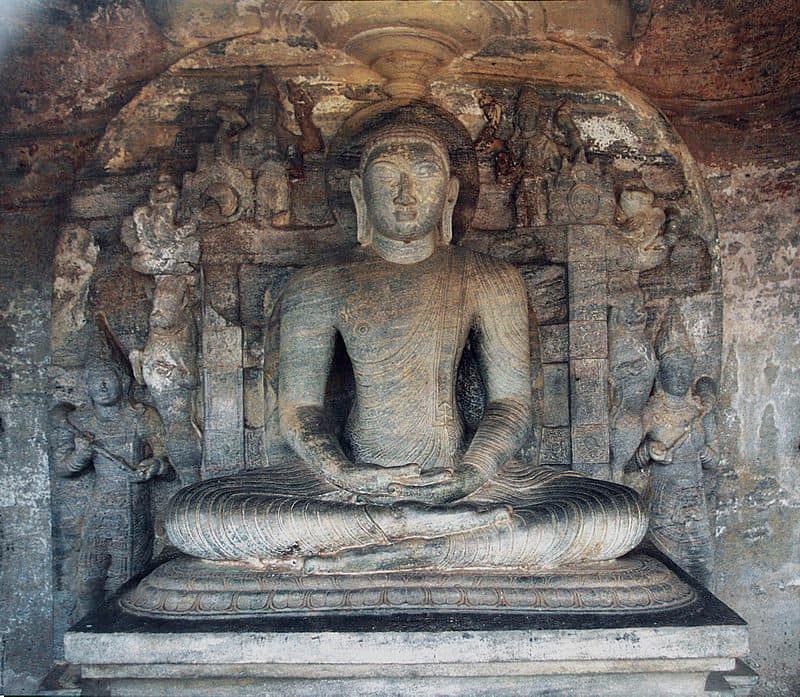
Some images from the Gal Vihara:

R

R

R

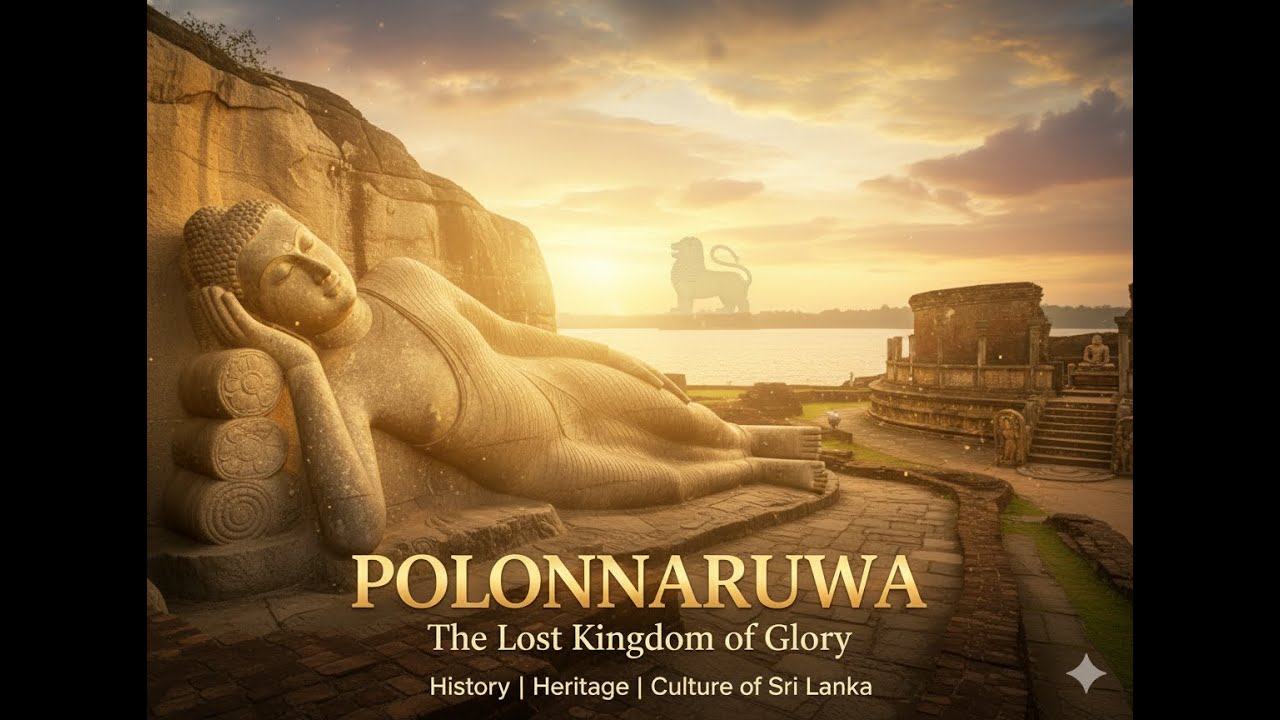
Here is an informative video about Polonnaruwa, with some footage of and info about the Gal Vihara:

R

Where is this information sourced from? very interesting.:slightly_smiling_face:

1 Like

The rock edict inscription was taken from the Siddham Asia inscriptions database, the text of which can be found here, in full:

I used AI for the translation of the inscription.

The rest of the writing is my own (with a little help from AI). It’s all very general history based on many sources. It’s based on knowledge I have accumulated from books, articles, internet searches, and so on.

I am glad you enjoyed it, Robert. :folded_hands:

R

1 Like

Hi Renaldo,
I have visited Sri Lanka 3 times and I deeply appreciate that it was the Island where the Dhamma was preserved. It is seeped in wonderful history.
This translation of the Mahavamsa is inspiring.
mahavamsagreatch00geigrich-pages-1.pdf (6.3 MB)
mahavamsagreatch00geigrich-pages-2.pdf (6.5 MB)
mahavamsagreatch00geigrich-pages-3.pdf (6.4 MB)
mahavamsagreatch00geigrich-pages-4.pdf (5.0 MB)

1 Like

Hi, Robert. Thank you for that! This looks like an excellent translation by Wilhelm Geiger. :folded_hands:

R

1 Like

According to the metadata for the inscription posted at the Siddham site, it states that the inscription contains “51 lines engraved between ruled lines 2½ inches (6.35 cm) apart on a sloping granite rockface. Prior to the incision of the inscription, a rectangular area of the rockface was chiselled smooth to receive the text. The inscription is now badly weathered.”

The site’s own translation (different from the AI translation I used) can be seen here:

They also provide an image, but it is a bit difficult to see the text itself.

The inscription is engraved on the smoothed area of sloping rock to the right of the cave entrance (see the second image).

R

What else was happening around the world in 1165 CE?

Pope Alexander III returned to Rome on November 23rd, after having been exiled since 1162 due to conflicts with the antipope Victor IV and Emperor Frederick Barbarossa; Emperor Rokujō (age 1) ascended to the throne in Japan; William I became King of Scotland; and Henry II of England invaded Wales, but was famously forced to retreat.

And within 120 years or so, the Abbasid Caliphate was destroyed when the Mongols sacked Baghdad (1258), Byzantium was significantly weakened after the Crusaders sacked Constantinople (1204), and the Song Dynasty fell to the Mongols (1279). Interesting times.

And they were very lucky to escape. The strategy of taking many prisoners of war in order to terrify their enemies and boost their own labour forces was a popular one among the Cholas. The captives were often utilized to build or work on massive infrastructure projects, including irrigation systems, projects which were central to the Chola economy and state-building efforts. This strategy continued to be popular for centuries across Southeast Asia, including for a number of other groups (particularly in Ayutthaya [Siam], Toungoo and Konbaung [Burma], and the Khmer Empire). It also morphed into the capturing of large groups of prisoners to conscript them into their own military forces, as well. This approach became a defining characteristic of mainland Southeast Asian warfare, particularly from the 14th to the 19th centuries. So much so that capturing as many captives as possible began to take precedence over taking land itself (to ensure that your armies were substantially enlarged enough so that you could defend the lands that you already held, and to be able to more effectively take other land, etc.). This, of course, differs significantly from the modern Western Clausewitzian approach that many people here will be familiar with.

R

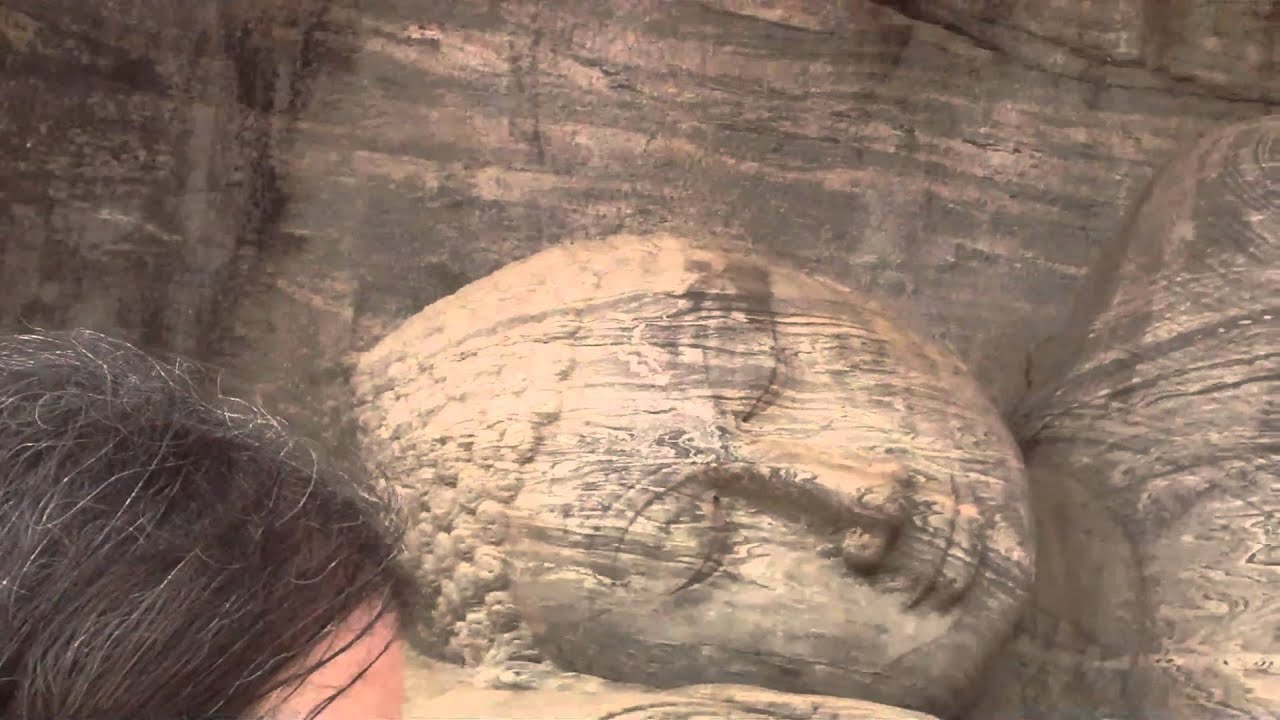
In the following video there is some decent close-up footage (if a bit shaky), especially of the reclining Buddha, a brief shot of the inscriptions, and a brief shot of the standing Buddha (some scholars interpret this figure standing with the arms-crossed mudra as the Buddha paying homage to the bodhi tree during the third week after his enlightenment, and other people say it is Ānanda grieving the loss of the Buddha). The chap and his companion make some interesting comments. It’s too bad the conversation didn’t last longer.

The description says that he is an Art Historian. That being the case, he would be intimately familiar with just how much of a psychological impact seeing these figures would have had on Buddhists who visited them throughout the ages. And of the fact that the powerful, wealthy, and educated of the time and place in which they were created, would have felt strongly that this was what they wanted to hand down to future generations, so that they could understand the importance of the Buddha, his teachings, and also of the events which took place and which were recorded in the inscription under King Parākramabāhu I.

R

Here is a little bit about the campaigns of King Vijayabāhu:

"In his campaign against the Cōḷas, the odds against Vijayabāhu had been a little short of overwhelming till he established a secure base in Rohaṇa. The improvement in his strategic position vis-à-vis the Cōḷas in Sri Lanka coincided with a weakening of Cōḷa power in peninsular India during the reign of Vīrarājendra I (1063–69). Confronted by a vigorous Cāḷukya challenge from the Deccan, the Cōḷas were increasingly on the defensive on the mainland and this certainly affected their response to the attacks which Vijayabāhu now launched on their colony in the Rājaraṭṭha. What had been for long a war of attrition now entered a new phase with an energetic two-pronged attack on the Cōḷa-occupied Rājaraṭṭha, with Anurādhapura and Polonnaruva as the major targets. Anurādhapura was captured quickly but Polonnaruva, the Cōḷa capital, only fell after a prolonged siege of the now isolated Cōḷa forces there. But faced with total defeat, Vīrarājendra I was obliged to despatch a relief expedition from the mainland to recapture the Rājaraṭṭha and if possible to carry the attack back into Rohaṇa.

Nevertheless, the respite which the Cōḷas in Sri Lanka gained by this was brief, for the will to struggle on in the face of determined opposition was eroded even further with the death of Vīrarājendra I. His successor Kulottuṅga I, a Cāḷukya prince, came to the throne after a period of acute crisis in the Cōḷa court, and his attitude to the Cōḷa adventure in Sri Lanka was totally different from that of his immediate predecessors Rājādhirāja, Rājendra II and Vīrarājendra—all sons of Rājendra I—for whom it had been a major interest and commitment. Unlike them, his personal prestige was not involved in the fate of the Cōḷa colony in Sri Lanka, and he could—and did—quite dispassionately end the attempt to recoup Cōḷa losses there. What mattered to him above all else was the security of Cōḷa power on the mainland. Thus by 1070, Vijayabāhu had triumphed and the restoration of Sinhalese power was complete.

Vijayabāhu’s role in the prolonged resistance to Cōḷa rule, which culminated eventually in their expulsion from the island, would by itself have ensured his position as one of the greatest figures in the island’s history…"

Silva, K M de. A History of Sri Lanka . Penguin Books Ltd. Kindle Edition.

R

This charming British family documents their trip to Polannaruwa.

R

In fact, Mahākassapa Thera of Mahā-Parakkamabāhu-Katikāvata fame may have also composed a Subcommentary to the Abhidhammatthasaṅgaha.

“The reign of King Parākramabāhu the Great ushered in another great epoch of literary activity. Three great scholarly monks flourished in his reign, namely, Mahā Kassapa of Dimbulāgala Vihāra, Moggallāna Thera and Sāriputta Thera. Mahā Kassapa was the author of a Sinhalese paraphrase (sannē) to the Samantapāsādikā, which is now lost. He is also reputed to have written a sub-commentary to the Abhidhammatthasaṅgaha. It is probable that he was also the author of several other works such as the Mohavicchedanī, which is a treatise on the Abhidhamma, and Vimativinodanī, which is a commentary on the Vinaya. Moggallāna, a contemporary of Mahā Kassapa, was the author of the Pali grammar, Moggallāna-vyākaraṇa. He is also credited with the authorship of the Abhidhānappadīpikā, which is the only ancient Pali dictionary in Sri Lanka…”"…

"…It should be mentioned here that the ṭīkās named above formed one of the major groups of Pali literature compiled during this period. As described in the Saddhammasaṅgaha, a Pali work of the 14th century, Mahā Kassapa and a large congregation of monks who assembled at the Jetavana Vihāra at Polonnaruwa decided to compose exegetical commentaries since the existing sub-commentaries on the old Aṭṭhakathās were unintelligible. Acting on this decision they compiled ṭīkās, namely, the Sāratthadīpanī on the Vinaya Piṭaka, the Sāratthamañjūsā in four parts on the first four Nikāyas of the Sutta Piṭaka, and the Paramatthadīpanī in three parts on the Abhidhamma Piṭaka.

These ṭīkās or sub-commentaries were works containing expositions of points in the Aṭṭhakathās compiled by Buddhaghosa and other commentators, which needed further elucidation for their correct interpretation. There were ṭīkās compiled from time to time subsequent to the compilation of the commentaries, and what the council headed by Mahā Kassapa performed was the bringing of these various ṭīkās together and making a synthetic summary of them. Though the Saddhammasaṅgaha does not give any prominence to the part played by Sāriputta at this council, it is well known that several ṭīkās were compiled either by him or under his supervision."

—H.R. Perera, Buddhism in Sri Lanka: A Short History

Note: I left out a section about Sāriputta, but I will post that elsewhere.

R

2015.50914.A-Manual-Of-Buddhist-Historical-Traditions_text bimala law.pdf (3.5 MB)
the translation is here :folded_hands:

1 Like

Wonderful, thank you for that, Robert. That is the 14th century text that H.R. Perera mentions above in Buddhism in Sri Lanka: A Short History, where he states:

"…Mahā Kassapa and a large congregation of monks who assembled at the Jetavana Vihāra at Polonnaruwa decided to compose exegetical commentaries since the existing sub-commentaries on the old Aṭṭhakathās were unintelligible. "

It’s wonderful that King Parākramabāhu the Great helped usher in such a period of literary activity. Without these reforms, not only would this period never have occurred, but we also might not have any Theravāda Buddhist lineage today. We know the Theravāda lineage was later reestablished in several Southeast Asian countries from the Sri Lankan lineage at various points in history. This occurred during periods when local monastic ordination lines had almost died out or become fragmented, and rulers sought to purify and revitalize the Saṅgha by importing ordination lineages from Sri Lanka, which was regarded as the authoritative source of Theravāda orthodoxy. History provides us with many examples.

And, of course, throughout history, the favor was also very much reciprocal.

I guess it all goes back to Contingency:

R