Clever wolf

wolf

wolf steals fish, a new discovery of animals using tools

Video from the coast of British Columbia may be the first documented instance of a wild wolf using a tool, according to the researchers who published it on Monday.

A wolf in British Columbia was filmed fishing on April 29, 2024, pulling in a crab pot from the water and eating the bait. (Video: Heiltsuk Wolf and Biodiversity Project)

The wolf seemed to know exactly what she was doing.

She dove into the water, fetched a fishing float and brought it to shore. She then waded back in and tugged on a rope connected to the float. She pulled and backed up, pulled and backed up, until a crab trap emerged. When it was within easy reach, she tore it open and consumed the bait inside.

The scene, caught on camera on the coast of British Columbia in May 2024, may be the first documented instance of a wild wolf using a tool, according to the scientists who published the footage in the journal Ecology and Evolution on Monday.

Although the intelligence of wolves is well known, the discovery adds to an expanding list of animals capable of manipulating tools to forage for food, a trait once thought to be unique to humans.

“It’s not a surprise they have the capacity to do this,” said Kyle Artelle, an ecologist with the State University of New York College of Environmental Science and Forestry who published the footage. “Yet our jaw dropped when we saw the video

2 Likes

There are a few mentions of the elephant and monkey doing tasks for the Buddha.
Monkeys and elephants are very intelligent animals.
Taken from Ven Anandajoti’s revised edition of Buddhist Legends (dhpA), called Dhamma Verses Commentary, page 49.

5b The Buddha, the Elephant, and the Monkey

Here is one quote:

Now a monkey saw the elephant up and doing each day, performing the lesser

duties for the Realised One, and he said to himself: “I‖ll do something too.” One

day, as he was running about, he happened to see some stick-honey free from

flies. He broke the stick off, took the honey-comb, stick and all, broke off a

plantain-leaf, placed the honey on the leaf, {1.60} and offered it to the Teacher.

The Teacher took it. The monkey watched to see whether or not he would eat it.

He observed that the Teacher, after taking the honey, sat down without eating.

“What can be the matter?” thought he. He took hold of the stick by the tip,

turned it over and over, carefully examining it as he did so, whereupon he

discovered some insect‖s eggs. Having removed these gently, he again gave the

honey to the Teacher. The Teacher ate it.

1 Like

yes, the reason I found this interesting was it shows the intelligence of animals - like we see in the Jataka stories.
Jataka 400

Once upon a time when Brahmadatta was reigning in Benares, the Bodhisatta was a tree-spirit by a river-bank. A jackal, named Māyāvī, had taken a wife and lived in a place by that river-bank. One day his mate said to him, “Husband, a longing has come upon me: I desire to eat a fresh rohita fish.” He said, “Be easy, I will bring it you,” and going by the river he wrapt his feet in creepers, and went along the bank. At the moment, two otters, Gambhīracārī and Anutīracārī, were standing on the bank looking for fish. Gambhīracārī saw a great rohita fish, and entering the water with a bound he took it by the tail. The fish was strong and went away dragging him. He called to the other, “This great fish will be enough for both of us, come and aid me,” speaking the first stanza:—

Friend Anutīracārī, rush to my aid, I pray:
I’ve caught a great fish: but by force he’s carrying me away.

[334] Hearing him, the other spoke the second stanza:—

Gambhīracārī, luck to you! your grip be firm and stout,
And as a roc would lift a snake, I’ll lift the fellow out.

Then the two together took out the rohita fish, laid him on the ground and killed him: but saying each to the other, “You divide him,” they quarrelled and could not divide him: and so sat down, leaving him. At the moment the jackal came to the spot. Seeing him, they both saluted him and said, “Lord of the grey grass-colour, this fish was taken by both of us together: a dispute arose because we could not divide him: do you make an equal division and part it,” speaking the third stanza:—

A strife arose between us, mark! O thou of grassy hue,
Let our contention, honoured sir, be settled fair by you.

The jackal hearing them, said, declaring his own strength:—

I’ve arbitrated many a case and done it peacefully:
Let your contention, honoured sirs, be settled fair by me.

Having spoken that stanza, and making the division, he spoke this stanza:—

Tail, Anutīracārī; Gambhīracārī, head:
The middle to the arbiter will properly be paid.

[335] So having divided the fish, he said, “You eat head and tail without quarrelling,” and seizing the middle portion in his mouth he ran away before their eyes. They sat downcast, as if they had lost a thousand pieces, and spoke the sixth stanza:—

But for our strife, it would have long sufficed us without fail:
But now the jackal takes the fish, and leaves us head and tail.

The jackal was pleased and thinking “Now I will give my wife rohita fish to eat,” he went to her. She saw him coming and saluting him spoke a stanza:—

Even as a king is glad to join a kingdom to his rule,
So I am glad to see my lord to-day with his mouth full.

p. 207

Then she asked him about the means of attainment, speaking a stanza:—

How, being of the land, have you from water caught a fish?
How did you do the feat, my lord? pray answer to my wish.

The jackal, explaining the means to her, spoke the next stanza:—

By strife it is their weakness comes, by strife their means decay:
By strife the otters lost their prize: Māyāvi, eat the prey.
1 Like

A Selection of Sources (sources for the compilation to Grant Steller’s Every Living Breathing Creature..

Tools

Environmental variability supports chimpanzee behavioural diversity, 2020
https://www.nature.com/articles/s4146…

Identifying functional and regional differences in chimpanzee stone tool technology, 2022
https://royalsocietypublishing.org/do…

New evidence on the tool-assisted hunting exhibited by chimpanzees (Pan troglodytes verus) in a savannah habitat at Fongoli, Sénégal
https://royalsocietypublishing.org/do…

Behavioral and cognitive perspectives on the evolution of tool use from wild chimpanzees
https://www.sciencedirect.com/science…

Planning abilities of wild chimpanzees (Pan troglodytes troglodytes) in tool-using contexts
https://link.springer.com/article/10…

Active self-treatment of a facial wound with a biologically active plant by a male Sumatran orangutan
https://www.nature.com/articles/s4159…

Religion/Ritual/Art/Music

Unearthing calfburialsamong Asian Elephants Elephas maximusLinnaeus, 1758 (Mammalia: Proboscidea: Elephantidae) innorthern Bengal, India
https://threatenedtaxa.org/index.php/…

Chimpanzee drumming shows rhythmicity and subspecies variation
https://www.cell.com/current-biology/…

Dance displays in gibbons: Biological and linguistic perspectives on structured, intentional and rhythmic body movement
https://www.biorxiv.org/content/10.11…

Spontaneous (minimal) ritual in non-human great apes?
https://royalsocietypublishing.org/do…

The evolution of human artistic creativity
https://pmc.ncbi.nlm.nih.gov/articles…

A group-specific arbitrary tradition in chimpanzees (Pan troglodytes)
https://pubmed.ncbi.nlm.nih.gov/24916…

Chimpanzees socially learn non-instrumental behaviour from conspecifics
https://brill.com/view/journals/beh/1…

Sex differences in chimpanzees’ use of sticks as play objects resemble those of children
https://www.cell.com/current-biology/…

Theory of Mind

Theory of mind in nonhuman primates
https://www.cambridge.org/core/journa…

Theory of mind in animals: Current and future directions
https://wires.onlinelibrary.wiley.com…

What Cognitive Representations Support Primate Theory of Mind?
https://www.cell.com/trends/cognitive…

Does the chimpanzee have a theory of mind? 30 years later
https://www.sciencedirect.com/science….

Wild Chimpanzees Inform Ignorant Group Members of Danger
https://www.sciencedirect.com/science…

Great apes use self-experience to anticipate an agent’s action in a false-belief test
https://www.pnas.org/doi/10.1073/pnas…

Time-space–displaced responses in the orangutan vocal system
https://www.science.org/doi/full/10.1…

Communication

A gestural repertoire of 1- to 2-year-old human children: in search of the ape gestures
https://link.springer.com/article/10…

Gelada vocal sequences follow Menzerath’s linguistic law
https://www.pnas.org/doi/10.1073/pnas…

Campbell’s monkeys concatenate vocalizations into context-specific call sequences
https://www.pnas.org/doi/10.1073/pnas…

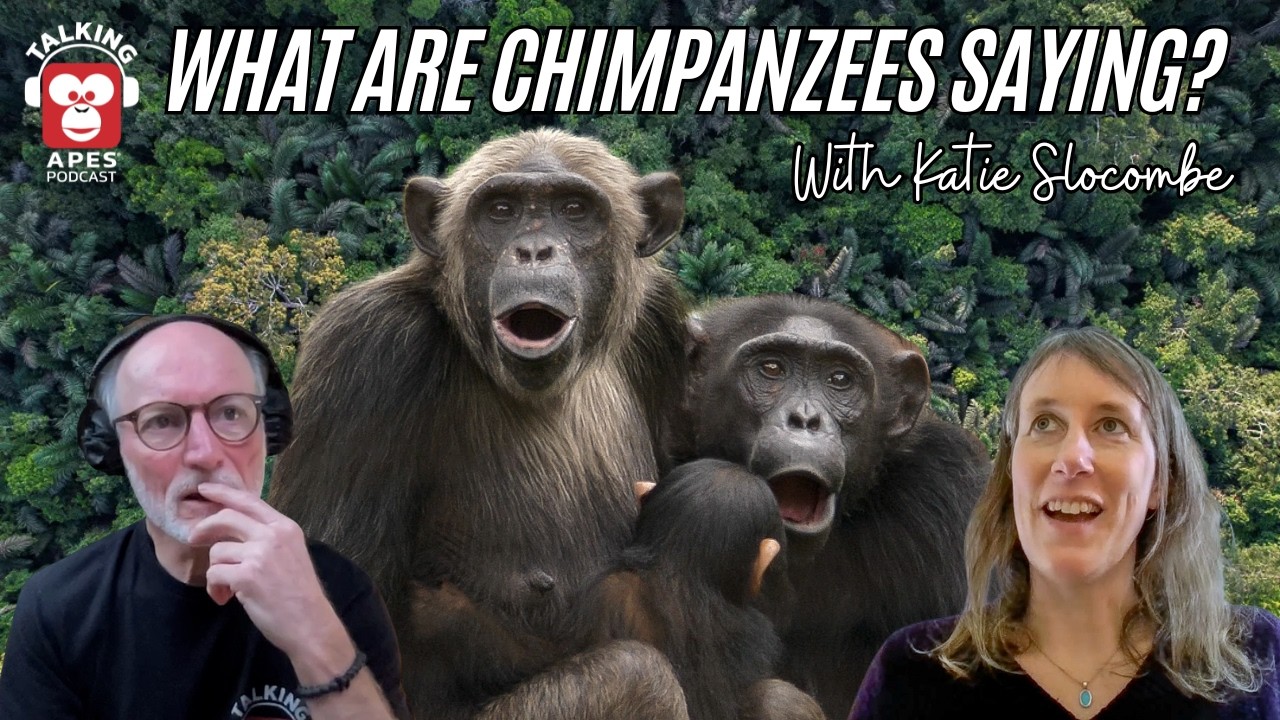
Chimpanzee utterances refute purported missing links for novel vocalizations and syllabic speech
https://www.nature.com/articles/s4159…

Vocal labeling of others by nonhuman primates
https://www.science.org/doi/10.1126/s…

Extensive compositionality in the vocal system of bonobos
https://www.science.org/doi/10.1126/s…

R

R

1 Like

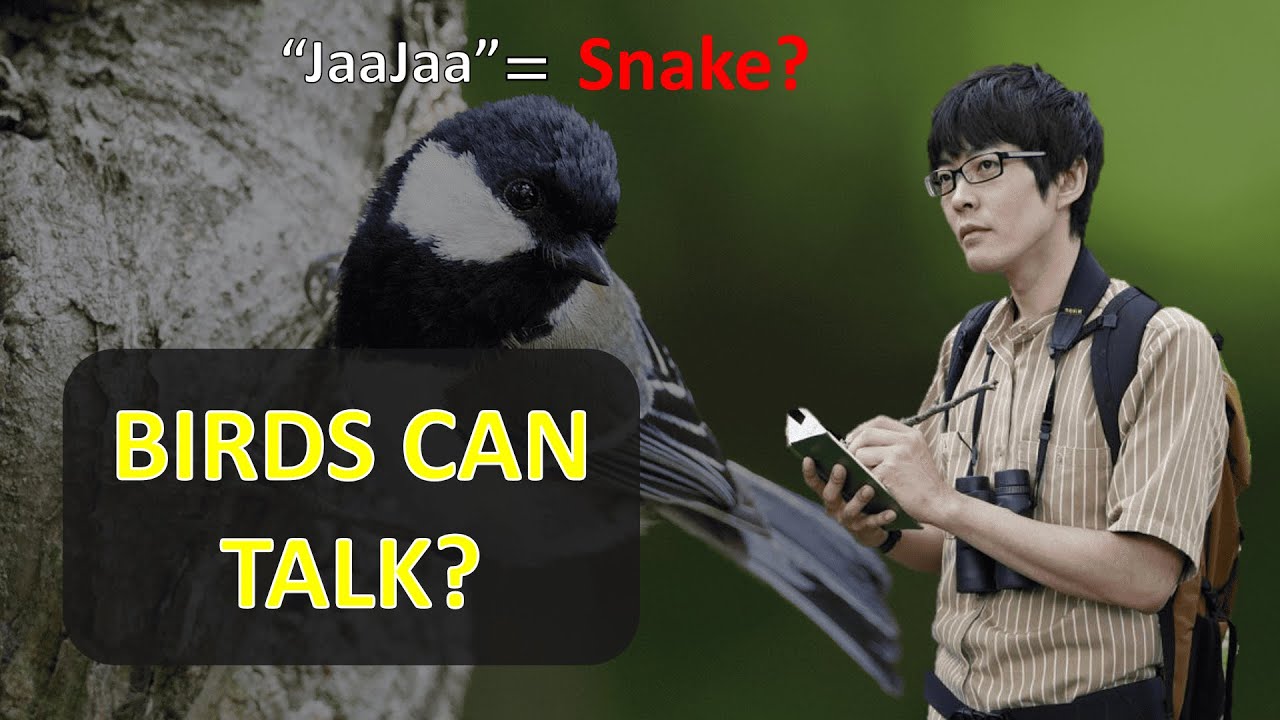
Science confirms that birds use language:

R

That is true. And as we know from studying the texts themselves, the artwork based on them, and the doctrines they contain—such as the ever-important Dasapāramī and Dasavidharājadhamma —a fair argument can be made that they rank among some of the most important and influential texts in all of Buddhist history.

We have been discussing how important they are in another thread here (and thank you for your contributions there, Robert):

I mean, even as recently as 2017, the funeral rites of King Rama IX included sermons on the Dasavidharājadhamma. That shows how influential they still are. And we know that the primary sources for the tenfold virtues of a ruler are the Jātaka and the Jātakatthavaṇṇanā.

And if that’s the case, how influential do people think the following words have been on Buddhist rulers throughout history?

“Dānaṃ sīlaṃ pariccāgaṃ ajjavaṃ maddavaṃ tapaṃ / akkodhaṃ avihiṃsā ca khantī ca avirodhanaṃ.”

And that’s just the Dasavidharājadhamma! It says nothing of the influence the doctrines of the ten pāramī and everything else contained in the Jātakas have had on people.

I find it baffling when people scoff at these texts. :folded_hands:

R

1 Like

The Jataka commentaries are wonderful . @Trobinson465 also noted that they encourage the development of the ten parami.

1 Like

There are also a lot of life lessons in the Jatakas. Also, something important to note is that many monks became enlightened after listening to Jatakas followed by a talk on the Four Noble Truths at the end. It is usually mentioned at the end of Jatakas.

2 Likes

Great point.

R