Anyhow, getting back to the technique. Let’s look at how the name was derived.
The scriptorium (“place for writing”) was a specialized room in medieval European monasteries where monks, or scribes, painstakingly copied, decorated, and preserved manuscripts by hand. Primarily active from the early Middle Ages, these centers of knowledge production utilized parchment, quills, and inks to create illuminated texts, playing a crucial role in transmitting classical literature and religious theology. Some famous scriptoria are ones such as the one at Monte Cassino in Italy and St. Martin of Tours in France.
In the Pāli-speaking world, while not “scriptoria” in the architectural sense, specific monasteries and institutions were vital hubs for copying and preserving manuscripts. A famous example is Āluvihāra (Alu Viharaya), Sri Lanka: This is the most direct historical equivalent in function. It is the revered site where the orally transmitted Pāli Canon was first written down on palm leaves*. And of course, historically, we have many such important monastic libraries in Theravāda countries. Monasteries across Sri Lanka, Thailand, Myanmar, Cambodia, and Laos have, for centuries, housed extensive collections of palm-leaf manuscripts. These have served as libraries and as centers where texts were copied and transcribed.
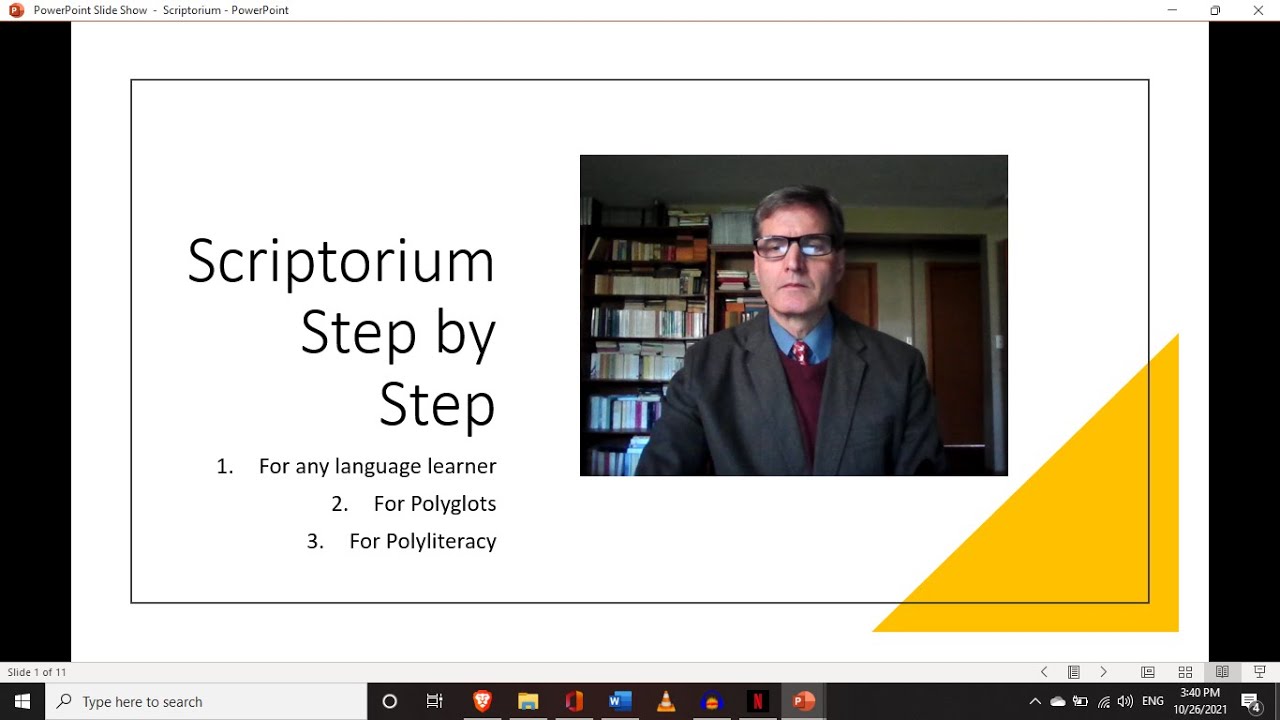
Returning to the technique. It is best used with any language by intermediate to advanced students, or for polyglots to “tend the garden”, as a way to continue practicing. It was originally developed by Alexander Arguelles, Ph.D., an American polyglot and linguist. Here is a video explaining the technique by Dr. Arguelles himself:
*I wrote a little about the importance of the palm-leaf manuscripts in the following thread:
R