Fall of Western Civilization

When and how do you think Western civilization will collapse? Do you think we will go back to a time without technology? I find it interesting that a technological world is not mentioned in the suttas, jatakas, apadanas. I think it’s possible that technology only exists when the human lifespan is below 100. When humans lived thousands of years and were happier, healthier and spiritually advanced, they didn’t need technology. Devas and Brahmas also don’t need technology.

I think western civilization will collapse when famine, war, flood, earthquakes, pandemic all happen at the same time. The next era after our modern era is probably a post-apocalyptic industrial age where the world loses its technology but is left with all the mechanical stuff, so it becomes messy and polluted.

Why would the fall of western civilisation mean an end of technology?

Yep. It’s going to take me a little time, but I will write more in response to you later.

Just boot up your computer, when it happens, and see if it still there. :folded_hands:

Renaldo

I remember a text that speaks about the fall of humanity. When anger predominates, humanity falls because of war. When greed predominates, it falls because of famine. When delusion predominates, it falls because of disease. I’m not sure if this is the correct order.

Now, which of these conditions is the predominant one in these days? In any of these scenarios, people with technological skills could become very few in number. A technological collapse is possible.

I believe that the texts do not describe technological societies because that would have exceeded the comprehension capacity of people at the time. Nothing prevents some jatakas and accounts of past lives we know from having taken place in technological eras. Or perhaps the Buddha may have deliberately chosen to give preference to stories set in low-technology times, leaving out the others.

1 Like

I don’t have much to add beyond @Brunobm’s excellent post.

:folded_hands: Renaldo

1 Like

One more world war, and we’ll revert to using pigeon post. But who knows, those were prosperous days.

1 Like

Indeed, pigeon post, falconry, etc.

Renaldo

1 Like

If western civilisation ceased to exist, why would the rest of the world not have any technology? Why would Japan not have technology anymore?

The results for Japan would actually be catastrophic. Global trade (as it exists currently) would largely collapse. This would mean that many materials, components, parts, etc. that they need for manufacturing would no longer be available, leading to an abeyance in production. The glocal economy would collapse, as would many local economies as a result, causing them not to be able to pay workers, etc. This could trigger energy and food crises. Many situations like this would arise as a result of the collapse of Western Civilization.

Due to the instability, Japan could also become embroiled in war itself, suffering because of regional conflicts and power struggles. For example, China would likely be in a much better position after such a collapse than Japan would, due to its size and resources, and it might decide to run military campaigns into Japan, at that point, for any number of reasons. One of which is that many parts of Japan have an excellent climate for food production, especially rice, which, in tough economic times, could feed many people. Another being that, having learned lessons from WWII when China was invaded by the Japanese Empire who occupied nearly 25% of the country (which was a mere 80 or so years ago and is in their recent memory), they may wish to take certain parts or all of Japan to protect themselves, and to project military power forward into the Pacific, the East China Sea (important for maritime trade and access to resources), the Tsugaru Strait (which was important in the Russo-Japanese war), The Sea of Japan (a wateway which connects Russia, Japan, North Korea, and South Korea, etc.).

So, yes, they certainly could lose a lot of their current technology. And without the correct political supports, it might also not be back up and running for a very, very long time either. Worst case scenario: even knowledge of how these things work would be lost.

I recommend reading a few books by Jared Diamond to broaden your mind about this topic, if you are interested. Particularly, Upheaval: Turning Points for Nations in Crisis, Collapse: How Societies Choose to Fail or Succeed, and Guns, Germs, and Steel as well.

Renaldo

I think its also perfectly possible the Buddha didnt mention those periods simply because people back then wouldnt have understood what he was talking about anyways.

1 Like

We’ve had technology since the Stone Age.

“Although everything is impermanent, I don’t believe that Western civilization will fall. Due to globalization, technology is being transferred worldwide. Some nations are more advanced than others, but technology continues to shape the course of humanity everywhere. Only a World War III involving atomic bombs could destroy this progress—but nations today are aware of what is good for themselves and for humanity. I don’t know for sure, but I strongly believe that we will only continue to advance—more and more.”

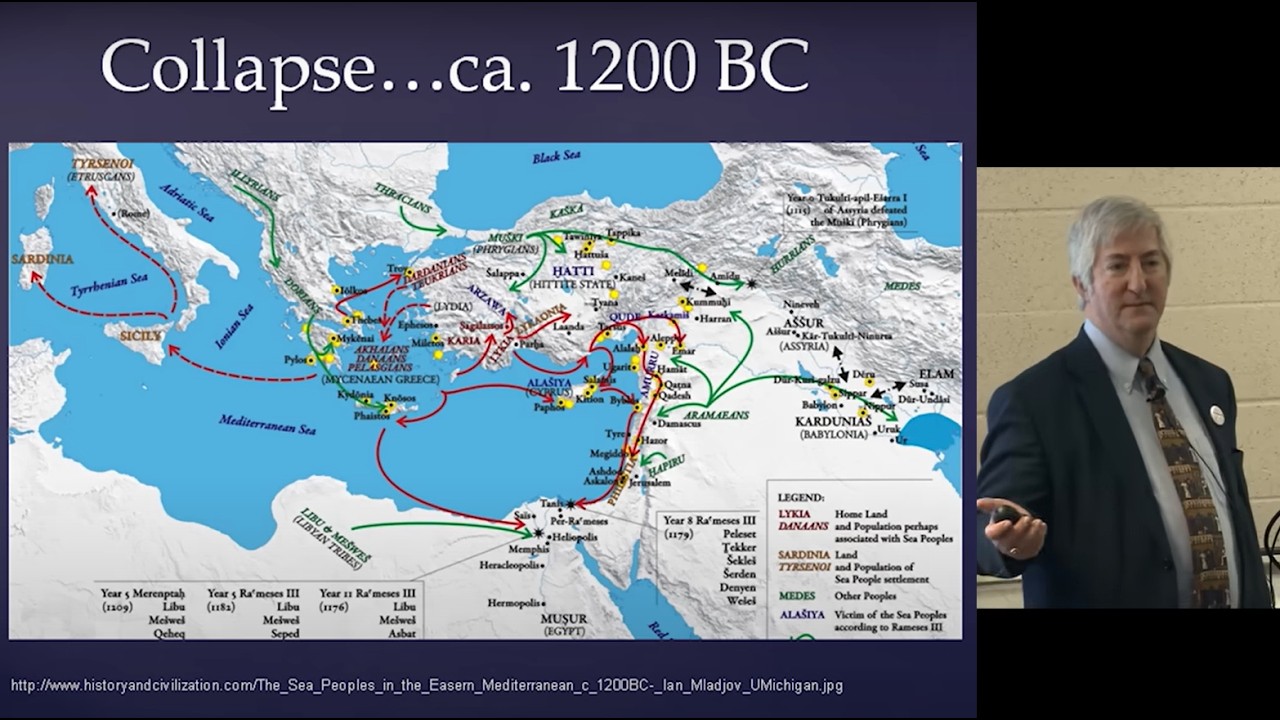
1177 BC: The Year Civilization Collapsed

Renaldo

There is also the possibility of us reaching Kessler syndrome, which I talked a little bit about in this thread:

R

I think we will eventually lose all our modern technology but it will probably be gradual. More and more wars will probably happen. There might also be new pandemic as well as other natural disasters.

The fall of western civilization and modern technology will probably happen before the 5000 years of the Sasana is over because after that no one will know the Buddha’s teachings anymore so I don’t think there will even be any computers or devices that store those teachings.

1 Like

Nothing exists essentially, including ‘Western Civilisation’

People talk about ‘Western Civilisation’ as though it were an inherently existing essence. It’s really just a vague referential term, covering a lot of countries with huge differences, who are constantly at war with each other.

The concept seems to only go back to about 1849: Google Ngram Viewer: Western civilisation

It bleeds into other civilisations. Most people in ‘Western Civilisation’ adhere to a Semitic religion. It grew out of Egypt (in Africa) and out of Mesopotamia. It has borrowed and loaned from Chinese culture (gunpowder, money), Indian (numerals), Arabic (chemistry), American (tobacco-smoking, Iroquois democracy).

Being attached to “Western civilisation” and experiencing suffering because it’s ending (“falling”) is based on the deluded view that there is such a thing, that it must exist inherently and permanently.

1 Like

Well said!

1 Like

Hi HappinessSeeker,

You might enjoy a book I am reading now based on this recommendation, about the fall of Rome. Here is a sample of it:

"The economic change that I have outlined was an extraordinary one. What we observe at the end of the Roman world is not a ‘recession’ or—to use a term that has recently been suggested—an ‘abatement’, with an essentially similar economy continuing to work at a reduced pace. Instead what we see is a remarkable qualitative change, with the disappearance of entire industries and commercial networks. The economy of the post-Roman West is not that of the fourth century reduced in scale, but a very different and far less sophisticated entity.43

This is at its starkest and most obvious in Britain. A number of basic skills disappeared entirely during the fifth century, to be reintroduced only centuries later. Some of these, such as the technique of building in mortared stone or brick, can perhaps be seen as products of specifically Roman styles of display, and therefore peculiarly susceptible to political and cultural change. But for other crafts, explanations in terms of cultural change, rather than economic decline, are impossible to uphold. All over Britain the art of making pottery on a wheel disappeared in the early fifth century, and was not reintroduced for almost 300 years. The potter’s wheel is not an instrument of cultural identity. Rather, it is a functional innovation that facilitates the rapid production of thin-walled ceramics; and yet it disappeared from Britain. Presumably, though I would be the first to admit that it is hard to credit, this was because there were no longer enough consumers around with sufficient wealth to sustain any specialized potting."

Ward-Perkins, Bryan. The Fall of Rome: And the End of Civilization (p. 117). OUP Oxford. Kindle Edition.

It’s a good read.

R

1 Like

In fact, it’s because the money economy completely dissapears from post-Roman Britain at that time:

R

Getting back to the original topic, it seems we have inherited the idea of the progress of time:

Yet things do not appear to be just linear in nature, but often cyclical in nature as well.

And, as Mark Twain and others have pointed out, “history does not repeat itself, but it often rhymes”.

R