Why Is Vassa and Vesak Late Sometimes

Here is an article I wrote long ago but recently updated. Many people get confused on Buddhist Leap Years.. This will help you.

Inline article below:
Updated: April 30, 2026: Original article in 2020.

This year is 2026, which is a leap year, and Vassa starts on July 30th (plus or minus a day due to different traditions).

Quick Chart for Leap Years (When Vesak and Vassa are Late)

Other Years:

  • 2020 (2-year leap year)
  • 2023 (3-year leap year)
  • 2026 (3-year leap year)
  • 2028 (2-year leap year)
  • 2031 (3-year leap year)
  • 2034 (3-year leap year)

Introduction

There seems to be confusion about when Vesak or Vassa is this year (2026). This year is a special year and Vassa starts the day after the full moon day in late July.

However, there are some traditions that believe that Vesak or Vassa are one month earlier Who is correct?

Today we will explain how the two calendar systems work and which one should be followed.

The Buddhist Calendar

The Buddhist Calendar follows the lunar calendar. We all know that the uposatha day falls on the new and full moon cycles, with minor uposathas on quarter-moon cycles. We do not follow the Gregorian calendar and observe our religious days on Sundays. Do you agree?

Buddhism follows the moons.
Vesak is based on a full moon day
Dhammacakkapavatthana was based on a full moon day.

We don’t use the Solar Calendar.
We use the Lunar Calendar.

Leap Year

Because of this, we need to do some math and adjust for the difference between the solar and lunar calendars, because winter would become summer and summer would become winter if we did not make adjustments.

Even the Solar Calendar has 1 day added for every four years. This is called leap year.

The Solar Calendar is 365 days per year.
The Lunar Calendar is 354 days per year.
The Lunar Month is 29 days and 12 hours and change.
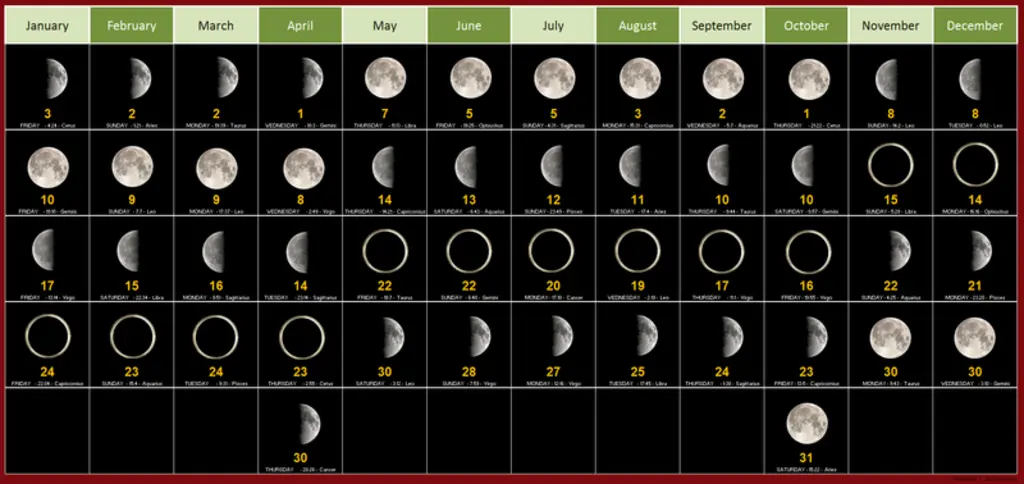
From Wikipedia

The difference is 11 days per year.

In 8 years there are 88 days. Or three months. So, we have to adjust every 8 years. Why 8 years?

8 x 11 is 88, and that is divisible by 29 days, or roughly one Lunar Month.

So we adjust the time lag in 3 separate times.
3 years
3 years
and 2 years.

3 + 3 + 2 is 8 right?

So in the Lunar or Moon Calendar we must add one lunar month or 2 pakkha to the Hot Season. There are normally 8 pakkha (new or full moon cycles), in a season. However, this Hot Season for this year has 10 pakkha (or the extra added lunar month).

Rainy Season comes after Hot Season, and now the rain is just starting to fall on a more regular basis in Myanmar. The lunar calendar is good for judging the weather. So plan your vacations accordingly!

So normally we add an extra month every three years.
This year is the year where we do this after 2 years.
3 + 3 + 2 = 8
Is that right?

And so there you have your answer about which calendar is correct. Some traditions follow the Lunar Calendar while others follow the LuniSolar calendar (Solar mixed with full moons).

Remember Buddhism follows the Lunar Calendar. This is also followed in India. They have two calendars. One is from the British Rule and the other is for the Hindu/Buddhist roots.

So, for this reason Vassa or The Buddhist Rainy Season starts the day after the full moon of July 29th. (in 2026). Vassa starts on July 30th.

Is Vesak Late too?

You might have noticed that some people celebrated Vesak (The Buddha’s Birthday, Enlightenment and Death) on two different months. This was for the same reason. This year the Lunar or Buddhist Calendar adds an extra lunar month. The next Lunar Leap Month will be 3 years from now, so mark your calendars!

So practice well and practice correctly this upcoming rainy season on July 30th.

An app for this.

Do you have Buddhist Sun ? You can find it in the iOS App Store and the Google Play Store. It is free.

Below is a video of Sayadaw U Kumarabhivamsa, who shared this information with me in detail. Afterwards, we made a less complex video for you all to watch.
1 Like

2 years.

I thought by adding in the months we are following lunisolar. So how is luni solar different? The muslim calender I know is pure lunar, so their ramadan, new year etc is moved 11 days earlier compared to solar calender every year. That’s why in malaysia the Hari Raya Haji moves to come near to the new year of many other races/ traditions/ religion.

PS. Ok just chatted with gemini, it says indeed muslim is pure lunar; whereas chinese, Hindu, Buddhist calenders are luni solar, because we manipulated the months or something to sync with the solar calendar.

Something like that.
There is an explanation by Sayadaw Kumarabhivamsa above. He is the one who explained it to me. Yogashrama also follows this as well as some Thai Traditions, and other traditions as well.

Well, the rainy season needs to happen when it’s raining. At least somewhere.

This is a completely innacurate explanation of the difference between the Lunar Calendar and Solar Calendar. The cycle of insertion of intercalary months is not in an 8 year cycle. It is inserted 7 times in 19 years. There is also an intercalary day inserted every few years as well. As adding a month is not quite sufficient. The pattern is 3,3,2, 3,3,3,2 . This is all good but that 1 intercalary day is added by a committee that tries to keep the one day discrepancy to a minimum. Hence the full moon days in Myanmar and Thailand differ by 1 day as they do this year. In this year they are 1 month and 1 day out of sync. Vesak day in Myanmar was April 30 and full moon in Thailand was 1 May but Vesak in Thailand is going to be May 31 st. in 2026.

Further reading. When I learnt about the Burmese calendar it was long time ago before the internet and I just found this document which explains further to my previous knowledge. It points out that the intercalary day calculation and method is different between Burma and Thailand so this increases the times that these two calendars don’t overlap on their full moon days by one day. It also does not mention Sri Lanka. Hopefully someone there will be able to comment. Please read the attached and be amazed.

Highlights of this texts are: “It is often seen stated that the intercalationof days follows a 57-year cycle requiring 11 intercalary days. It is true that very frequentlythere are 11 intercalary days in 57 years, but the canonical scheme presented above does not result in any recognisable pattern in which years the intercalary days should be inserted and cannot be used as an intercalary rule.”

“Secondly, the rule for inserting intercalary days was changed several times and these changes completely destroyed the original beauty and consistency of the original system. Today, there are no canonical rules for setting up future Burmese calendar dates, the intercalation beingdetermined from time to time by a committee of calendarists. A suggestion of a new computer algorithm for a reformed Myanmar calendar canbe found on the Internet (Yan Naing Aye, 2013).”

“A distinction between the Thai and Burmese systems, one with more dislocating effect than one might have imagined, is that the Burmese mode says that ayear with an extra day can occur only in a year that also has an extra month, whereas the Thai system says that a year with an extra month cannot also have an extra day.”

TheCalendarsofSEA.pdf (1.4 MB)

Interesting but too long and complicated. This is what sāsana is using, and I explained the system.. There is another time where something is added to further correct things. I’ll have to look it up and post here. Yogashrama is often a day later than Myanmar. I was thinking of lobbying to get us to follow the Myanmar calendar. But rest assured that, pa-auk is where I got the information and I think the calendars are not reflecting the pa-auk or “Classical Theravada” calculations.

We follow the classical theravada calculations until a new Buddhist Council decides we change it. This is the way.

Ok so where are the classical theravadin calculations in the canonical texts? I bet you can’t find them. If you want to learn you have to read a bit and the calendar predates Buddhism hence if you bother to have an open mind and read you will see that the Burmese one is based on the Indian system. I find it amazing how complex it is and how much the clock and Calendar of the ancient world was calculated shows they spent a lot of time observing nature. https://en.wikipedia.org/wiki/Surya_Siddhanta

“The solar part of the luni-solar Hindu calendar is based on the Surya Siddhanta.[49] The various old and new versions of Surya Siddhanta manuscripts yield the same solar calendar.[50] According to J. Gordon Melton, both the Hindu and Buddhist calendars that are in use in South and Southeast Asia are rooted in this text, but the regional calendars adapted and modified them over time”