Thank you everyone for taking the time to reply to this post.
Here’s what I found. This might be a long read. I hope everyone will give the time for this. It took me a while to look for all this. I will try to keep this clean and readable as much as I can so I won’t include the Pali for everything.
From the Great Chronicles of the Buddhas, which is a translation of the Buddhavamsa and also includes other commentaries and canonical texts:
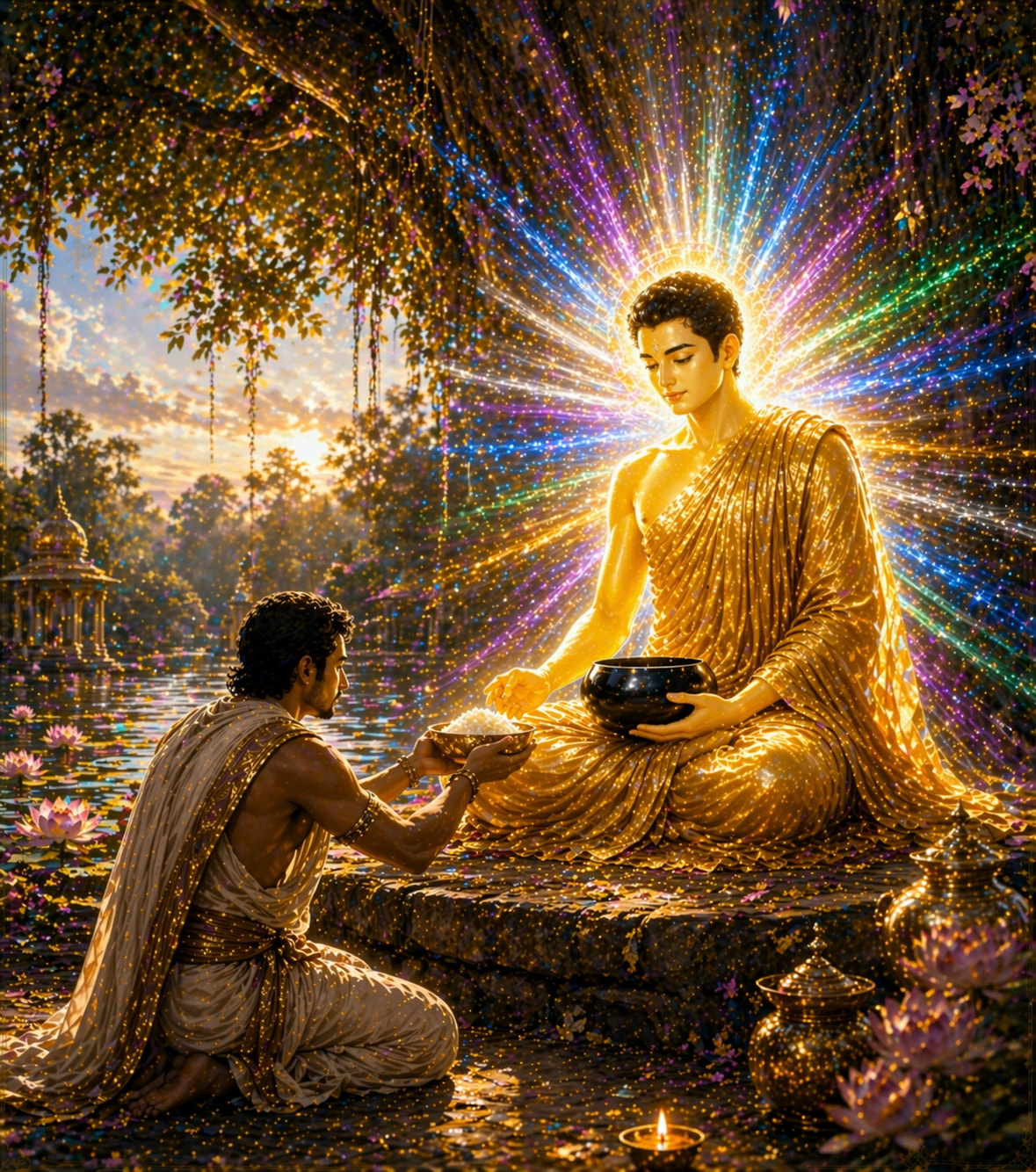
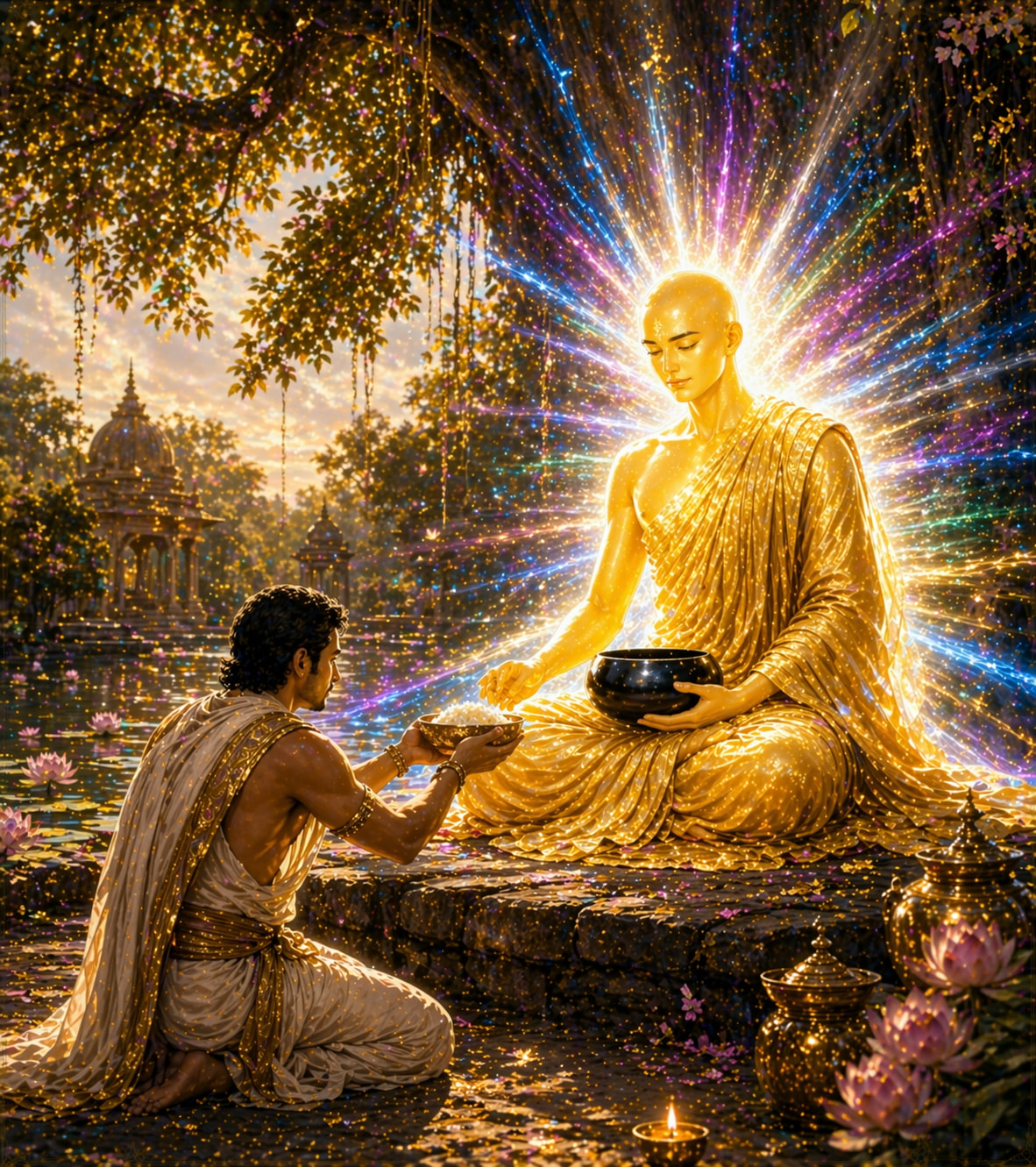
After alighting from Kaṇḍaka, and while standing on the pearly sandbank, the Prince addressed Minister Channa: “Friend Channa, take Kaṇḍaka together with my ornaments and return home. I will become a recluse.” When Channa said that he would also like to do the same, the Prince forbade him three times saying: “You cannot have permission to become a recluse, Friend Channa. Just go back to the city.” And he handed over Kaṇḍaka and the ornaments to Channa.
Thereafter, considering: “These locks of mine do not suit a recluse, I shall cut them with my sword,” the Prince, with the sword in his right hand, cut off the hair-knot and seized it together with the diadem by his left hand. His hair of two finger-breadths in length that was left behind cuffed to the right and lay close to the head. The length of the hair remained two fingers breadth till the end of his life with no further cutting. The beard and the whisker also existed for the whole life with their length good enough to look beautiful like the hair. There was no necessity for the Prince (the Bodhisatta) to shave them again.
https://www.bps.lk/olib/mi/mi014.pdf
So based on this, the Buddha did have hair. According to a Well-Respected and Famous Venerable from Myanmar, in the past, even men wore long hair, so a hair of two fingers breadth is still short compared to long hair worn by others. And he is right because even in ancient china, men used to wear long hair. So people from the past might still call a hair of two-finger breadth bald and shaven compared to their long hair.
The Great Chronicles of the Buddhas also mentioned this:
The Buddha taught a discourse, beginning with the words Tanca Kammam katam sādhu, on the advantages of ‘a rewarding deed of merit’ with reference to a flower seller named Sumana of Rājagaha during His stay at Veḷuvana Monastery in that city.
The flower seller used to present King Bimbisāra with eight kunzas of Spanish Jasmine (Jasminum grandiflorum) every morning, for which he was granted eight pieces of money each day.
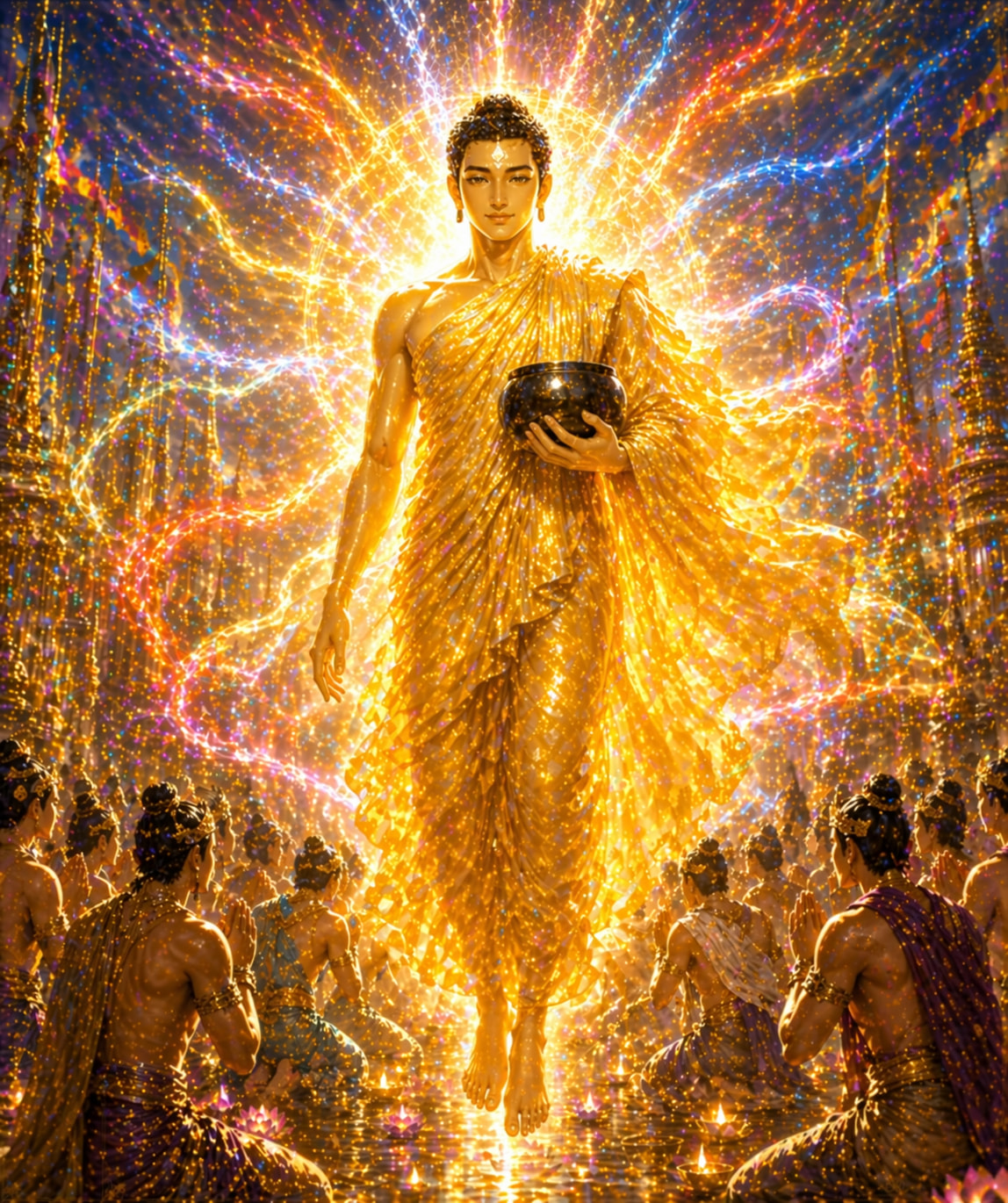
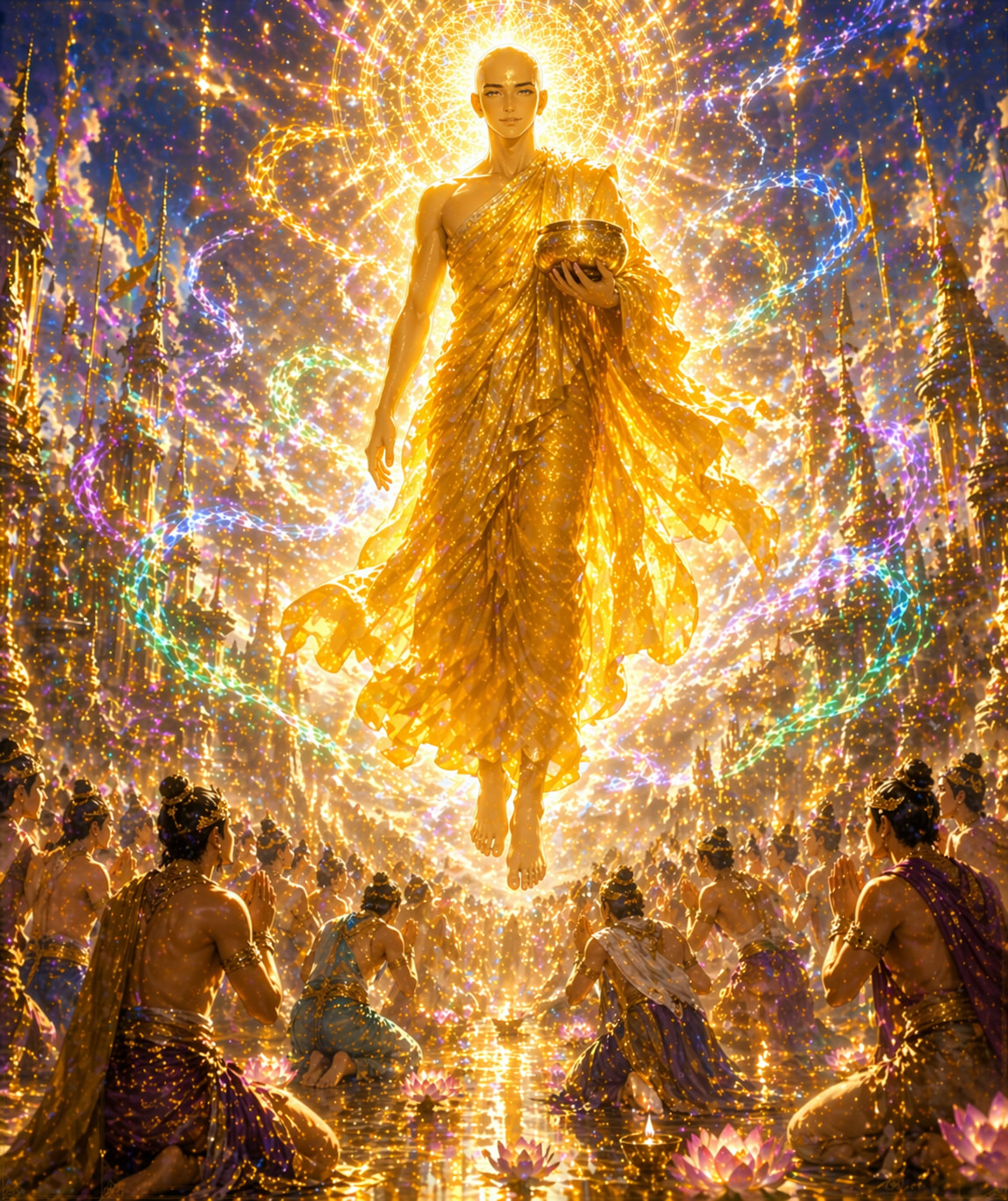
One day, as Sumana was entering the city with flowers as usual, the Buddha, attended by many bhikkhus, was also entering the city for alms-round, with rays of light shining forth from His body, and with great dignity, splendour and glories of a Perfectly Enlightened Buddha.
(N.B. Sometimes, the Buddha used to go round, like an ordinary bhikkhu on an alms-round, with the six rays of light concealed by the robes. (For instance) He went out all alone incognito to a distance of thirty yojanas to meet Aṅgulimāla, the notorious robber. But, at other times, He used to go with rays of light shining, for instance, when He went on alms-round in the city of Kapilavatthu. And, on this day, when He was to meet Sumana, the flower seller, the Buddha entered the city of Rājagaha with rays of light shining forth from His body, and with great dignity, splendour and glories of a Perfectly Enlightened Buddha).
When Sumana saw the Buddha, with a body like an ornamented gateway column, replete with thirty-two major characteristics and eighty minor characteristics, and six coloured rays of light from His body, entering Rājagaha city to go on alms-round with great dignity, splendour and glories of a Perfectly Enlightened Buddha, there arose in him intense devotional faith and reverence for Him.
The commentary to Dhātuvibhaṅgasutta explains why Pakkusati couldn’t recognize the Buddha:
After his meal, the Buddha rested briefly, then, without informing even Sāriputta or Moggallāna, took his robe and bowl and went alone on foot, thinking: “Out of reverence for me, he traveled on foot without even sandals or a parasol. I too should go on foot.” Without flying through the air or shortening the distance, he walked the entire way.
Concealing his Buddha-radiance, he went in the guise of an ordinary monk, like the full moon hidden by clouds. Traveling the forty-five yojanas in a single afternoon, he arrived at the potter’s workshop just as Pukkusāti had entered. Thus it is said that Pukkusāti had gone forth out of faith and was staying there.
Even then, the Buddha did not forcefully enter saying, “I am the Fully Enlightened One.” Instead, standing at the door, he gave Pukkusāti the opportunity and said, “If it is not inconvenient for you…” granting him freedom.
Pukkusāti, having renounced a vast kingdom, would not begrudge even a humble dwelling like a potter’s shed. But foolish monks sometimes, overcome by attachment, claim dwellings as “mine” and prevent others from staying.
The Blessed One then entered and sat down on a simple grass seat spread in that workshop—dirty, filled with ash, broken pots, straw, and refuse—like entering a heavenly mansion.
Thus, both were of noble birth, both had made great aspirations, both had renounced kingdoms, both were golden in complexion, both possessed meditative attainments. The potter’s hut shone brilliantly with the presence of these two, like a cave illuminated by two lions.
Yet neither thought of resting from the journey. The Buddha entered the attainment of fruition; Pukkusāti entered the fourth jhāna of mindfulness of breathing. Thus they spent the night absorbed in meditation.
The commentary also mentions this:
It is said that people would recognize the Tathāgata when they see him resplendent with the glory of a Buddha. That is not remarkable. But when the Buddha conceals his radiance and wanders in the guise of an ordinary alms-monk, he is difficult to recognize. Therefore, Pukkusāti spoke naturally when he said he did not know him, even though they were sitting together in the same potter’s hut.
The subcommentary to Dhātuvibhaṅgasutta says:
The Blessed One, out of compassion, also chose to walk on foot rather than use supernatural powers, in order to honor the young man’s effort. Concealing his radiance, he appeared as an ordinary monk so that Pukkusāti would not be overwhelmed and so that his fatigue from the journey could settle. One who is still exhausted from travel is not capable of properly receiving the Dhamma.
Thus, the Blessed One approached quietly and began by asking a question to establish the conversation. Without such a question, discourse does not properly arise. Even though Pukkusāti did not recognize the Buddha, this was natural, since the Buddha had concealed his appearance.
I also found the reason why King Ajātasattu asked where the Buddha was.
Commentary to Sāmaññaphalasutta
But at the very moment the king set foot on the ground, the Blessed One’s radiance spread through the king’s body. Immediately sweat poured from his whole body; his garments felt as if they should be wrung out and removed. Remembering his own wrongdoing, great fear arose in him.
Unable to go straight to the Blessed One, he took Jīvaka by the hand and, as if strolling around a park like a casual visitor, kept praising the monastery buildings:
“This is well done, friend Jīvaka; this is very well done.”
Step by step he approached the doorway of the “lamp-courtyard” (maṇḍalamāḷa). “Approached” here means: he arrived there.
“Where is the Blessed One?” — why did he ask?
Some say “because he didn’t know,” claiming: “He had seen the Buddha long ago with his father, but after associating with bad friends, killing his father, sending assassins, releasing Nāḷāgiri, etc., he had never again faced the Buddha—so he asked without recognizing him.”
The commentary rejects that as unreasonable. For the Blessed One—marked with excellent bodily features, adorned with secondary marks, illuminating the entire park with six-colored rays—sat in the middle of the lamp-courtyard surrounded by monks, like a full moon surrounded by stars. Who would not recognize him?
So, the real point is: he asked as a royal display. This is typical of royal families: even knowing, they ask as if not knowing.
When Jīvaka heard it, he thought:
“This king is like someone standing on the earth asking ‘Where is the earth?’ or looking at the sky asking ‘Where are the sun and moon?’ or standing at Mount Sineru asking ‘Where is Sineru?’—and now standing before the Ten-Powered One asking ‘Where is the Blessed One?’”
So, thinking “I’ll show him the Blessed One,” he saluted with hands joined toward the Buddha and said:
“This, Great King…” (and so on).
“Seated at the front” (purakkhato) means: seated in front of those who sat surrounding him.
The commentary to the Buddhavamsa describes the appearance of Venerable Mahakassapa. He had golden skin like the Buddha.
“And also Mahākassapa…”: Compared with Uruvelakassapa, Nadīkassapa, Gayākassapa, Kumārakassapa, and the lesser elders, this one is ‘Mahā’ (the Great), hence he is called “Mahākassapa.”
The particle “pi” conveys honor and inclusive summing-up.
“Uttatta-kanaka-sannibho”: “with skin-color like heated gold,” i.e., like refined, glowing gold.
“Dhutaguṇe”: because it “shakes off” defilements, the practice is called dhuta (“shaking-off”); the “dhuta-quality” means the dhuta-dhamma, i.e., the ascetic practice.
The commentary to Upassayasutta says the Venerable Mahakassapa resembles/is comparable to the Buddha.
In the tenth (sutta), when Ānanda says, “Come, Bhante,” why does he request to go to the bhikkhunīs’ residence?
It is not for the sake of gain or honor. Rather, there are bhikkhunīs there who are in need of meditation subjects (kammaṭṭhāna). Thinking, “I will encourage them and have the meditation subject explained,” he makes this request.
But is not he himself learned in the Tipiṭaka and very knowledgeable? Could he not explain it himself?
It is not that he is unable. However, he thinks:
“How will they place faith in the teaching of a disciple, compared to that of a disciple who is comparable to the Buddha?”
Thus, he makes the request.
Commentary to the Brahmajala sutta describes the Buddha’s appearance:
At that time, it is told, the six-colored rays of the Bearer of the Ten Powers issued forth from his body, filling and pervading an area eighty feet on all sides. The forest clearing through which they were walking appeared then as though it were bestrewn with garlands and wreathes made of gems or with the dust of pulverized gems, as though it were a beautiful golden cloth embroidered with gems, as though it were sprinkled over with the essence of red gold or filled with a hundred meteors or bestrewn with clustered (golden) kanikāra flowers, as though it were bestrewn with red China lead reduced to powder and scattered about by gusts of wind or as though it were irradiated and illuminated throughout by the splendor of rainbows, streaks of lightning, and the multitudinous host of stars. The Exalted One’s body, adorned with the eighty minor marks of physical beauty, was like a lake filled with blooming lotus flowers and water lilies, like a pāricchattaka tree in full blossom, like the canopy of the sky sparkling with the light of the stars, smiling down with glory from above. And with his thirty-two characteristics of physical beauty woven, as it were, into a garland shining with splendor for a fathom all around, he surpassed in glory the glory of a garland composed of thirty-two moons or thirty-two suns, the glory even of thirty-two world-ruling monarchs, of thirty-two celestial kings, or of thirty-two Mahābrahmās. Surrounding the Exalted One stood bhikkhus all of few wishes, content, fond of solitude, aloof, exhorters, censors of evil, teachers, tolerant of correction, endowed with virtue, concentration, wisdom, emancipation, and the knowledge and vision of emancipation. Standing in their midst, the Exalted One was like a golden pillar surrounded by a red woolen rampart, like a golden boat amidst a cluster of red lotus flowers, like a tower of flame encircled by a coral railing or like the full moon surrounded by the host of stars. The sight filled the eyes even of the birds and beasts with joy, much more, then, did it bring joy to the eyes of gods and humans. On that day most of the eighty great disciples accompanied the Exalted One. With their cloud-colored rag-robes arranged over one shoulder, carrying their walking sticks, they appeared like perfumed elephants clad in solid armor—all free from corruptions, their corruptions ejected, their defilements shattered, their tangles disentangled and their bonds cut. The Exalted One, free from lust, hatred, and delusion himself, stood surrounded by those free from lust, hatred, and delusion; free from craving himself, he stood surrounded by those free from craving; devoid of defilements himself, he stood surrounded by those devoid of defilements; enlightened himself, he stood surrounded by those enlightened after him. Travelling along that road like the moon across the sky with the inconceivable, incomparable grace of a Buddha, produced through the power of merit accumulated over an immeasurable period of time, the Exalted One appeared like the filament (of a lotus flower) surrounded by petals, like a pericarp surrounded by filaments, like a six-tusked elephant king surrounded by eight thousand bull elephants, like a royal swan surrounded by ninety thousand swans, like a world-ruling monarch surrounded by his complete army, like Sakka the king of the gods surrounded by the multitude of gods, like the Mahābrahmā Hāritasurrounded by the multitude of Brahmā gods
https://www.bps.lk/olib/bp/bp209s-Bodhi_All-Embracing-Net-Of-Views.pdf
Also, this is just for extra information but appearances of Venerable Sariputta and Venerable Mogallana are also explained in the commentary to Buddhavamsa.
Now, in order to show the names of some elders, verses beginning with “Sāriputta the great wise one, (who is) like the koraṇḍa-flower…” were spoken.
Here, “koraṇḍa-samasādiso” means: “having a complexion like the koraṇḍa blossom.”
If so, one might ask: “Shouldn’t it be said only once, either ‘koraṇḍa-samo’ (like a koraṇḍa) or ‘koraṇḍa-sadiso’ (similar to a koraṇḍa)? Why does it say both: ‘sama-sādiso’ (like-and-similar)?”
This is not a fault. Because he is just like a koraṇḍa and similar in nature to a koraṇḍa, the expression “koraṇḍa-samasādiso” is used. The intention is: it is not said as an excessive or redundant expression.
Venerable Mogallana
“Gajjitā” means “they roar,” therefore “roaring ones.”
“Like a rain cloud” means: “roaring like a dark rain cloud,” with the intention: in the sphere of psychic power.
“Nīluppala-samasādiso” means: “having a complexion like a blue water-lily (nīluppala / blue kuvalaya).”
The meaning here should be understood in the same way as explained earlier.
“Moggallāno” is the name received by clan/gotra: he is Kolita.