3 posts were split to a new topic: Using Goenka Retreats For Other Types of Non-GoenkaPractices
2 Likes
I would rephrase that it is important to have good teachers and friends who can help you distinguish between situations when it is useful to keep going and situations where it is advisable to not keep going. Clearly, if the answer to every question is “just keep going”, that’s not really teaching…
2 Likes
I think it is, indeed, problematic when a teacher is just repeating the same instructions, not giving advice based on the specific issues of a student. Especially if it ignores the possibility of physical or mental harm.
1 Like
He lived in Armenia, but left Armenia. Also, as far as I know, being a monk, he worked in Armenia as a “psychotherapist”, which caused questions from laymen I knew from Armenia
if you want to spread dhamma and vipassana teachings to a broad audience, you need to simplify it. And Goenka’s vision wasn’t to add another book to the already huge budhist bibliography that monks and specialists would read, his vision was to bring it in simple form to the max of ppl… its a different objective, therefore the evaluation of his teachings should take this into account.
Bruce Stewart,
a teacher in the group:
In Or Out
1982 marked the beginning of intimate involvement with the Goenka tradition. Besides being appointed an Assistant Teacher, Senior Teacher and later a full teacher (Acariya), I was heavily involved in setting up the initial organizational structure and center development, including design and oversight of the expansion that continued over the years. .
[…]On Aug 7, 2023, I sat down and wrote an email I called “the tipping point” to Maureen. I’d never written down my thoughts to Maureen instead of just talking to her, especially about something so serious, but I wanted to be extra sure that I could clearly articulate what was going on with me.
This morning, as I was meditating, I found myself reflecting about the Dhamma journey we have been on together and my need to be true to myself going forward. In short, I need to finally move on from my involvement in a tradition that has given me so much, yet is not serving my current needs and has left me dry in so many ways. I’m at a ‘tipping point.’ I can no longer in all honesty pretend to align with Goenka’s beliefs and fabricated story of a pure technique/Dhamma being transmitted from teacher to pupil and on to him in some magical way…and that nothing should change in order to maintain the purity he insists is true. It simply does not ring true for me. It feels so contrary to his captivating messaging of ‘universal Dhamma’ and ‘no one person/religion/tradition owning truth/Dhamma.’ While I don’t think the tradition is a ‘cult,’ this kind of language feels cultish to me. This purity/prophecy narrative which is so deeply ‘baked into the cake’ is at the core of my discontent.” I finished the letter by saying; “I feel no need to ‘leave,’ although I understand most will see it that way. I don’t see that this has to be an ’in-out’ thing… there is nothing to be in and nothing to be out of… there is only Dhamma with no limitations. I love the tradition for all of its great strengths while also recognizing its limitations and weaknesses and have absolutely no regrets about all that I’ve done and benefits I’ve received.
While this was initially difficult for Maureen, her unwavering support for me to follow my own path has been huge and beyond words. I remain deeply grateful to her.
Six months after writing my message to Maureen, I took the next step and sent a lengthy letter to the North American Acariya (Teacher) group responsible for overseeing the Organization’s activities in North America, stating my decision to transition from my Acariya duties and focus on other areas of service at Dhamma Patapa, the center in Georgia we were responsible for overseeing.
[…] Sadly, after a number of conversations with other Acariyas that so often boiled down to “Are you in, or out?!”, I was banned from going to Dhamma Patapa and by extension, I assume, all SN Goenka centers around the world.
2 Likes
I was recently reflecting on the SN Goenka method and how it rejects noting the in and out breaths. It does not get more basic than that.
1 Like
Did you notice that Goenka did not do the Anapana in the way by observing the breath, Respected Sayadaw?
rejecting the noting of in- and outbreath?
Yes, that was what I said. There is no knowing or noting of in and out in Goenka. He says so directly in the instructions.
yes, Sayadaw: it is correct. You might not know the story behind this. I only recently read about it. Kindly make your own judgement. Quote from Storti, Craig: Noble work, UK, 2023, page 175: “He (Mr. Goenka) told…a story about some Indian came to him on one occasion after they had done two days of Anapana and explained that they were bored and wanted to do something else. Initially he (Mr. Goenka) encouraged them to develop their samadhi further, but when they resisted, he gave in the their wishes and told them to keep their attention at the base of the nose and feel any sensation they found there.” Interesting, isnt it !
Actually not as bad as i remember, but he is against verbalization and visualization.
You can use a transcribing program to find the text. I’m afraid to post here due to possible copyright issues.
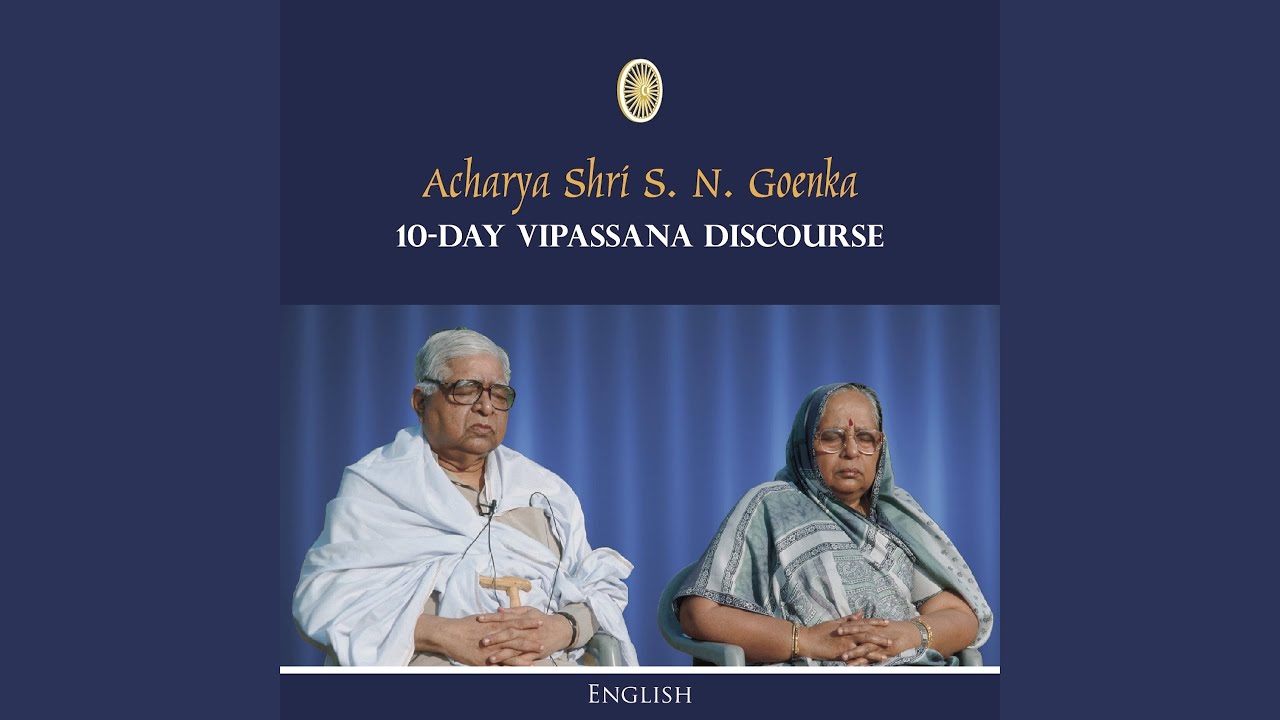
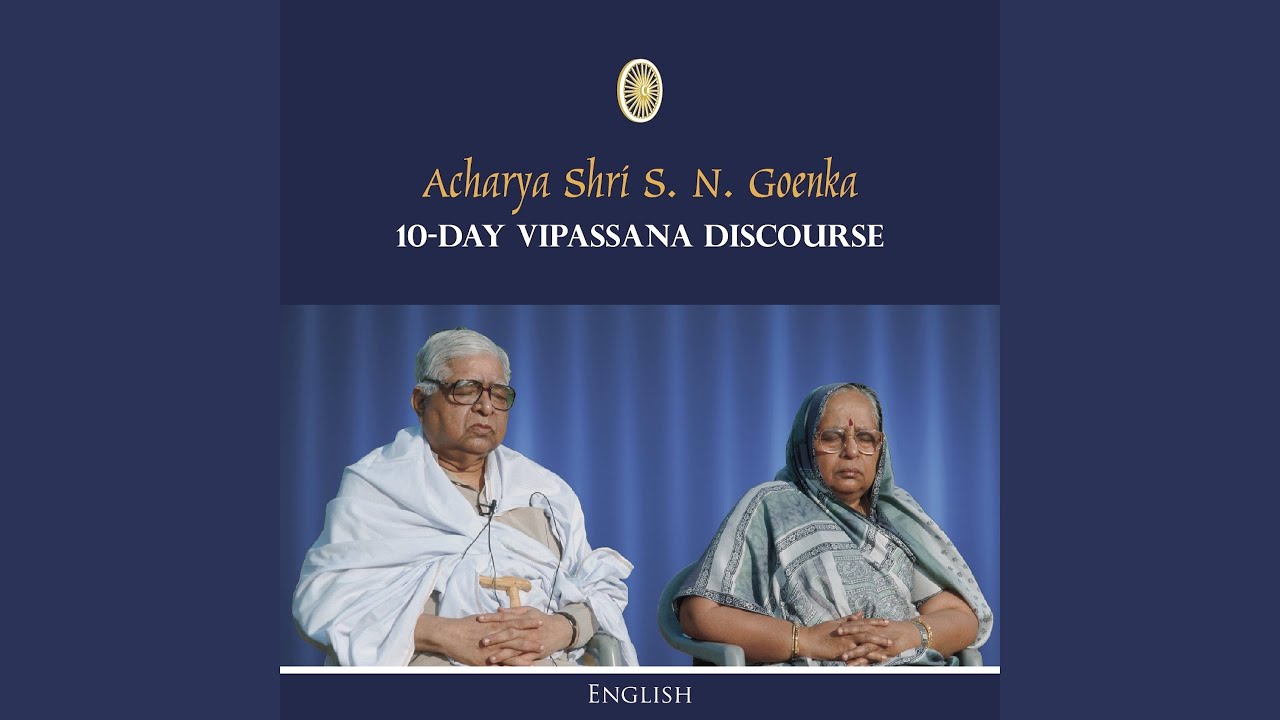
“If my story offers anything, I really hope that it offers permission to question sincerely, to grow beyond structures that once served us, and to hold both gratitude and discernment at the same time,” offers Shelina Rose, a former Acharya in the S.N. Goenka Vipassana tradition, having stepped away from that role a couple of years ago. Her central point is not that discipline is a mistake or that communities are useless, but that the same sincerity that draws a person into a spiritual container can later require them to grow beyond it. For her, spiritual maturity involves moving from dependency toward autonomy, while keeping genuine gratitude for what once helped.
Born in Nairobi, Kenya to an Indian family in the Ismaili Muslim tradition, they moved to London when she was a very young child. When she was eleven, alone in her family kitchen, she was struck by a sudden thought: that people return life after life in order to grow more intelligent. The force of that insight made her unwilling to continue her family’s religious practice. She refused to keep attending mosque, and although the decision caused conflict at home, she held to it, agreeing only to appear at major social occasions so her parents would not feel publicly shamed. Even as a child, she was reacting against a gap she sensed between what was taught and what was lived. As a teenager and young adult, she read widely, drawn to philosophy, religious traditions, and accounts of unusual human experience. The search was not academic for her. It was a response to a persistent question about what life was for.
Shelina entered medical school in Cardiff in Wales and later trained as a general practitioner in London. In that training, she encountered forms of suffering that intensified her questions. On a pediatric ward that treated severe burns, she witnessed the slow recovery of a young girl who had been burned extensively and had become mute. An art therapist supported the child in drawing what had happened, but the young patient was unable for many months to even attempt to sketch it. When the child finally depicted the truth of the trauma, she began to heal and speak again. For Shelina, watching that process was a formative lesson in the inseparability of mind and body. It shaped her later medical work, which leaned toward attentive listening and psychological depth rather than a purely drug-centered approach.
By adulthood she built a life that looked successful from the outside. She had a stable career, financial comfort, friends, and a relationship. Yet she was not happy, and she could not explain the unhappiness by pointing to any obvious external lack. Eventually she concluded that she could not keep living on the assumption that conventional success would become satisfying if she only achieved more of it. She left her job, sold her flat, ended her relationship, and traveled to Australia with a backpack, trying to find a more direct answer to the meaning of life.
Within weeks she met a couple living simply in the bush. One of them recommended a Vipassana course in the tradition of S.N. Goenka, emphasizing that it would be extremely difficult yet also deeply worthwhile. The recommendation landed at a moment when Shelina was ready to commit to something demanding. She attended her first ten-day course in Victoria, and on the fifth day she experienced what felt like a decisive breakthrough. The technique gave her an explanation of why suffering arises and a practical way to work with it. Three months later she returned for a second course, stopped drinking and smoking, and began practicing regularly.
Her involvement intensified quickly. She studied Pāḷi at Dhamma Giri in India and remained there for three and a half years, serving extensively. She was appointed an Assistant Teacher in the tradition at a relatively young age. Later she returned to Europe, took on increasing responsibilities, and built a life that included marriage, a child, her work as a general practitioner, and expanding Dhamma service. Over time she was appointed as an Acharya, and served five years as Area Teacher for Scandinavia, the Baltics, and Russia. For many years, the organization provided her with a complete container: discipline, a shared path, and a close community that felt like family.
Her reverence for Goenka was real and remains part of how she tells the story. “The energy of that man was giant,” she says, and describes his presence as powerful, loving, and clear. She remembers the impact of being near him on courses and in daily rhythms of practice and chanting. The tradition, for her, was not merely an institution. It was a lived world of meaning, spiritual friendship, and the joy of service. Watching students transform felt like a privilege, and the structure helped her ground her life in ethical commitment and regular practice.
As her responsibilities grew, she also began seeing aspects of organizational culture that unsettled her; for example, she felt that the culture did not naturally support open inquiry. “You weren’t really trained to think.” In her view, teacher training emphasized repeating Goenka’s standard answers and maintaining uniform delivery, rather than responding from one’s own lived understanding, and the pressure toward standardization made nuanced guidance harder. Although she understands the rationale for that decision, as many of the courses were very large, she found this culture increasingly constraining over time, especially when sincere attempts to question or improve things were seen as disloyalty rather than as care for the community.
At the same time, her personal practice shifted. Years of intense focus on bodily sensations had brought her profound benefit, but she began to feel she had reached a limit in what that narrow focus could reveal for her. “It becomes a fossil after a while.” Her concern was not that the practice was worthless, but that rigidity—both in organizational culture and in the sense of what counted as legitimate inquiry—could freeze a living path into something that no longer supported growth. When Shelina decided to turn toward direct study of the suttas and explored broader contemplative approaches that included reflection and a widening of attention, she found that this opened new questions and new kinds of insight that she could not reach while confined to one institutional lens.
Her decision to leave the Goenka organization was not impulsive. She describes it as the result of long wrestling with conscience, integrity, and values, and stresses that throughout it all, she has remained committed to the Buddha’s teaching. As why she decided to leave, Shelina points to a sense that her evolving practice ultimately required greater freedom, as well as her determination that she could no longer represent an organization when the internal dissonance had become too painful for her to hold. The consequences were severe. Shelina experienced shunning and vilification; she lost community, friendships, her home, her financial security and even her marriage, along with an identity that had shaped much of her adult life. The cost, in her telling, was part of what made the move an act of real renunciation rather than a casual change of preference.
Rebuilding her life was grueling, and a particular teaching from one of her mentors helped her through it: “Every action is either an expression of love or a call for love.” That frame allowed her to see fearful or hostile behavior on the part of others, as a manifestation of conditioning, rather than proof of villains, and it helped her move from hurt toward compassion. She retrained as a transformational life coach and began supporting others through major life transitions, including the kind of identity collapse she had lived through.
Her practice now is less about belonging to a single structure and more about living in a way she experiences as embodied Dhamma. She emphasizes care as the thread that ties inner transformation to daily engagement. That care includes attention to intention, responsibility in relationship, and the willingness to live in community without surrendering critical agency. It also includes a return to creative expression, something she says was present in her from childhood but that she suppressed during years when she believed spiritual seriousness required narrowing her life. Shelina is currently studying art and exploring how creativity can contribute to goodness without turning into another rigid identity.
When she considers whether the Goenka organization can reform, Shelina is cautious. She believes meaningful cultural change would need to arise from within, and she doubts that deep-rooted narratives can be revised quickly or cleanly. Still, she does not position her story as a warning meant to stop people from practicing. She recommends that sincere seekers can benefit from a ten-day course as an introduction that grounds ethical discipline, while also recognizing that some practitioners eventually reach a point where further growth requires broader inquiry.
In the end, Shelina describes her journey as two renunciations: first leaving conventional success to commit to a spiritual path, and later leaving an all-embracing tradition to mature into greater inner authority. The consistent thread is the refusal to abandon conscience for comfort, even when comfort is spiritual. Her closing message is simple and direct: “I encourage you to question and to continue to grow
1 Like
The rigid culture has kept it alive and even expanding.
In some ways. The same could be said about Classical Theravāda.
Sometimes it is not perfect to be rigid and unbending, but preserves what we have.
Obviously the world is a lot bigger with CST Theravāda.