In MN 97 Dhanañjānisutta was the Buddha subtly scolding Sariputta for not teaching the path to paranibbana? Is there more to this sutta in the commentary?
“But Sāriputta, after establishing Dhanañjāni in the inferior realm of divinity, why did you get up from your seat and leave while there was still more left to do?”
“Sir, I thought: ‘These brahmins are devoted to the realm of divinity. Why don’t I teach him a path to the company of Divinity?’”
“And Sāriputta, the brahmin Dhanañjāni has passed away and been reborn in the realm of divinity.”
Thus have I heard: this is the Dhanañjāni Sutta. In this context, “in Dakkhiṇāgiri” refers to a region named after a mountain; it is the area lying to the south of the mountain that surrounds Rājagaha. “At the Taṇḍulapāli Gate” refers to one of the city’s gates. It is said that Rājagaha had thirty-two great gates and sixty-four smaller gates; among them was one called the Taṇḍulapāli Gate, and this is the one being referred to.
“Relying on the king” means this: being sent by the king with the order, “Go and collect the share of the crops without oppressing the people,” he goes and seizes all the grain anyway. When the brahmins and householders say, “Please, sir, do not destroy us,” he replies, “What is said in the royal court is insignificant. I was already instructed like this when I came from the king. Do not cry,” and in this way, under the pretense of relying on the king, he plunders the brahmins and householders. He brings most of the grain into his own house and only a small portion into the royal treasury. When asked, “Did you not oppress the brahmins and householders?” he says, “Yes, Your Majesty, but this time the fields yielded little grain, so even though I collected it without oppression, not much was obtained,” and thus, relying on the brahmins and householders, he deceives and cheats the king.
“Let milk be drunk” means: let fresh milk be drunk. “Until the meal is ready” means: by the time you drink the milk and sit down, the meal will be ready. This indicates that breakfast food will be brought here. Regarding “mother and father,” elderly parents should be supported by providing soft bedding and coverings, fine clothing, delicious food, and fragrant scents and garlands. Sons and daughters should be supported by performing all duties such as naming ceremonies and other responsibilities; in this way, one should care for one’s family. If this is not done, blame will arise—this is the meaning.
An “unrighteous person” (adhammacārī) is one who engages in the five kinds of immoral conduct or the ten unwholesome actions; these are called “adhamma” here. “They would drag him” means they would pull him to various hells for punishments such as the five kinds of bondage.
A “righteous person” (dhammacārī) is one who performs lawful and proper work, such as righteous agriculture and other honest occupations. “They decline” means they fall away or diminish; “they advance” means they grow and prosper. “Better” means superior; “inferior” means low or base.
“And Sāriputta, the brahmin Dhanañjāni has passed away”—this was said by the Blessed One with the intention, “Go there and teach him.” The Elder went immediately and taught the Dhamma to the great brahmā. From that point on, even when reciting verses of four lines, he did not teach without including the Four Noble Truths.
The phrase “the mountain that surrounds Rājagaha” refers to the Paṇḍava Mountain. The region called Dakkhiṇāgiri is the district situated to the south of the city of Rājagaha, near that mountain. The term “Taṇḍulapāli” means “a row of rice bundles.” Near that gate, rice merchants would open their sacks of rice and sit in a line displaying them; because of this, the place came to be known as the “Taṇḍulapāli Gate.” When it is said that he “takes all the crops,” it means that after leaving only just enough for the poor farmers’ daily expenses, he takes all the remaining harvested grain. “Poor yield” refers to crops that have produced only a small amount.
“In this way” means that servants and workers should be supported by providing clothing, food, and wages, and on special occasions, by giving wealth, garments, and ornaments. Duties toward friends and ministers should be fulfilled through kind speech, helpful actions, and fairness; the same applies to relatives. “Relatives” are those connected through marriage ties, while “blood-relatives” are those connected through parents and lineage. Guests are called “atithi” because they do not stay fixed in one place even when properly given; thus, one should treat them as oneself in sharing resources—this is called the “duty toward guests.” “Former relatives” who have passed away and are now in the realm of departed spirits should be honored by giving offerings at appropriate times dedicated to them—this is the “duty toward departed ancestors.” Offering perfumes, flowers, ointments, lamps, and food to deities at proper times is the “duty toward deities.” Serving the king is the “duty toward the king.” The phrase “this body” refers to one’s own body. This is the meaning indicated by the statement, “the meaning should be understood in this way.”
The “five kinds of immoral actions” are those opposed to the five basic moral precepts. The “ten unwholesome courses of action” are the ten kinds of immoral deeds. One who behaves unrighteously is also called one who acts improperly, since such a person engages in bodily and other forms of misconduct; therefore, the term “improper conduct” is not separately explained.
“They decline” means they fall away or deteriorate; thus it is said, “they decrease.” “They advance” means they progress and grow; thus it is said, “they increase.” “There” refers to the Brahma world. “His” refers to Dhanañjāni who was reborn in the Brahma world. “From that time onward” means from the moment when the Blessed One said, “This, monks, is Sāriputta…” onward. “Apart from the Four Noble Truths” means a teaching that is separated from, analyzed apart from, and not connected with the Four Noble Truths. In reality, even before that, he did not teach anything apart from the Four Noble Truths, because without them, there is no path leading out of suffering.
Please format your answers better. Use the included AI tool or use an external AI tool. This is not readable. Furthermore, your answer is slop. Please read the question and context and only answer what is needed.
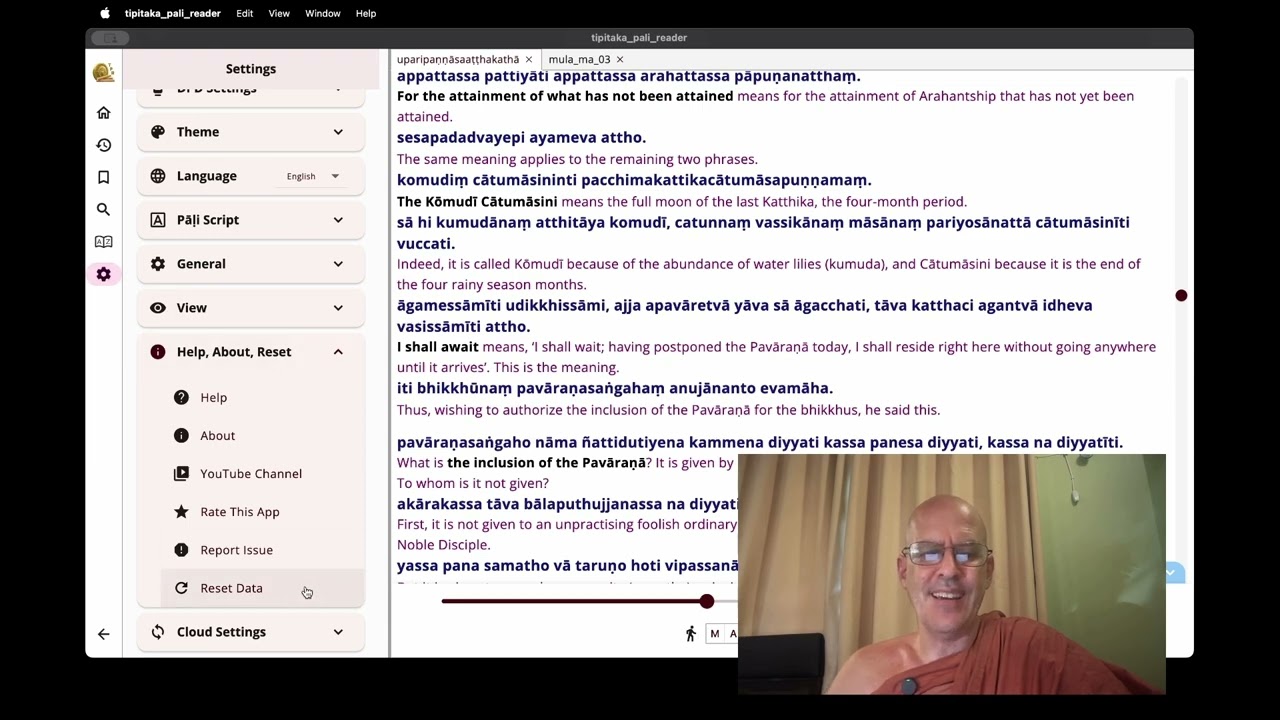
Here is a formatted answer using the included classicaltheravada custom ai
kālaṅkato ca sāriputtāti idaṃ bhagavā ‘‘tatrassa gantvā desehī’’ti adhippāyena theramāha.
Kālaṅkato ca Sāriputtā: The Blessed One spoke this phrase, “He has passed away, Sāriputta,” to the Elder with the intention, “Go there and teach him.”
theropi taṃkhaṇaṃyeva gantvā mahābrahmuno dhammaṃ desesi, tato paṭṭhāya cātuppadikaṃ gāthaṃ kathentopi catusaccavimuttaṃ nāma na kathesīti.
And the Elder, going immediately, taught the Dhamma to the Mahābrahmā named Dhanañjāni. From that point on, even when speaking a four-lined verse, he did not speak anything apart from the Four Noble Truths.
Subcommentary:
catusaccavinimuttanti niddhāretvā vibhajitvā vuccamānehi saccehi vimuttaṃ.
Catusaccavinimuttaṃ (released from the Four Noble Truths) means released from the truths when they are distinguished and expounded.
atthato pana tato pubbepi saccavimuttaṃ kathaṃ na kathesiyeva saccavimuttassa niyyānassa abhāvato.
However, in terms of meaning, even before that, why did he not teach a path to liberation from the truths? Because there is no deliverance apart from the truths.