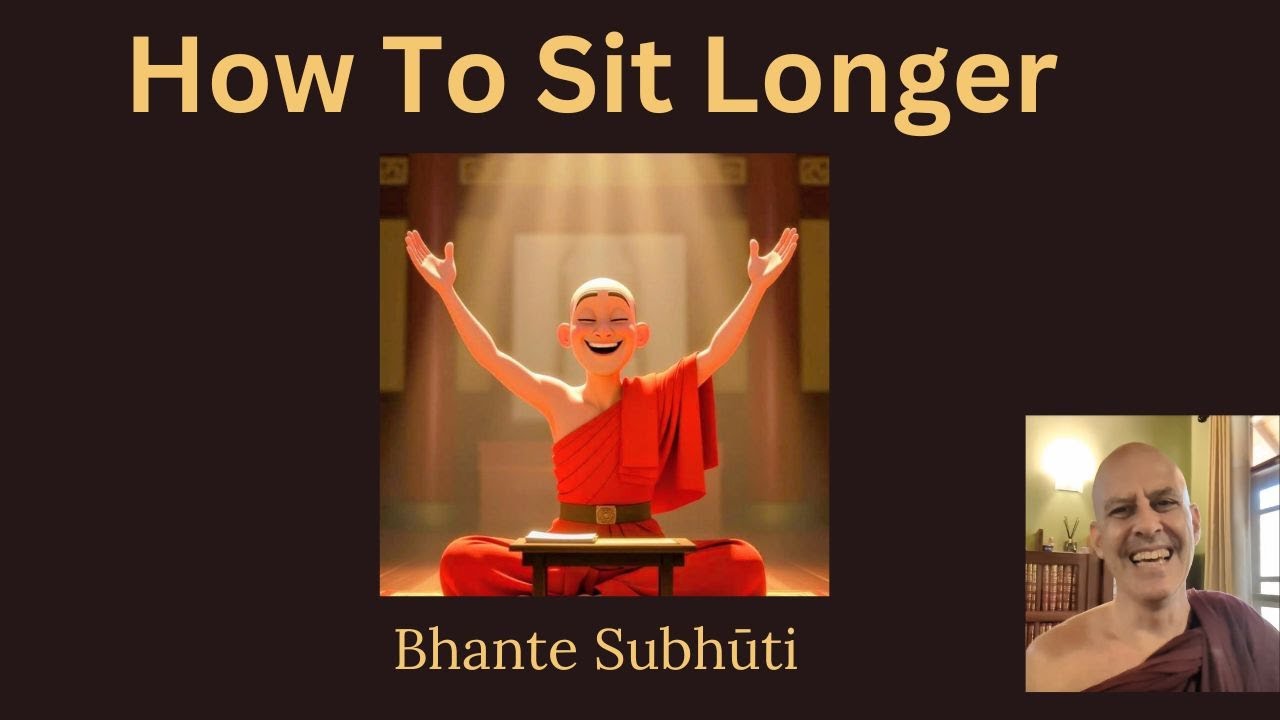
During meditation, as a practitioner gains experience, they are often able to sit for longer and longer periods.
Sometimes I wish to remain seated longer, but my mind does not allow it. Other times, my mind is willing, but my body does not cooperate.
When the mind resists, I know I must bring more attention to the breath. But even when focus is steady, pain can still arise in the legs.
I have heard that ignoring leg pain for too long could cause problems in the future. So what should a practitioner do? Should they endure the pain if they can still stay with the breath, relying on strong willpower? Or should they pause for a few minutes, stretch the legs, and then resume?
I believe I have found my answer, but I still seek guidance. Can I safely ignore the leg pain without risking harm in the long run?
I do not have any medical condition the pain is due to seating long time in one position (crossed leg) due to that there might be pressure on nerve and blood vessels..
Before one can give advice on pain, one needs to know the conditions.
How are you sitting (chair, pillow, posture if on the floor).
How long do you sit for?
How long can you concentrate for ? (concentration means continuous focus without losing your focus.. but we can also relax that to say, before you get lost in your own thoughts).
You can read a lot about postures and the science behind it in my post on the “Make The Best Free Meditation Seat”
Please answer the questions based on before and after reading the doc below.
Also generally, we say to shift your posture when you encounter pain after ignoring it and it comes back and disturbs your practice. Shift your posture means, if your left foot is in front, reverse it so your right foot is in front.
Burmese style is the most widely used posture in Pa-Auk (the place where many people get jhāna).
AFAIK nothing serious will happen as long as the “pain” goes away within a few minutes after exiting the position.
When I sat it was burmese, I used pillows, blankets and in the end bought a zafu but still my right leg went numb and I felt a lot of discomfort after 45-60 minutes and couldn’t concentrate.
I stopped sitting and now I stretch daily (just the butterfly posture for 15 minutes 1-3 times per day) and my goal is to sit without a pillow, or at least with a pillow but no “pain” (I am hoping opening the hips will allow me to sit without discomfort).
For whatever reason, it is only my right leg that is the issue.
Most monks, even those who sit over 24 hours at a time use a base and an angled pillow (wedge shape 30 deg). Usually both the base and “pillow” are medium density foam. A picture of the cushion setup is here. Sitting for 1 hour or 90 minutes if you do not have concentration is perfectly fine and you are allowed to shift your legs during that time. If you want to sit longer, get up and do walking meditation.
Try to have realistic goals. Work on meditation as the goal. A lot of poeple after struggle “sitting without pain” often equate accomplishment with “sitting”, ignoring concentration quality. Don’t get stuck into that false ego. Sit in a chair if you need to. Try with your eyes open. The main thing is concentration if you are doing samatha.
When I started meditating 14 years ago, it became grueling after 15 minutes. Over time I was able to sit for longer and longer and with less and less padding. I experimented with different postures like a stool and standing (which I found surprisingly good) but have always gravitated to sitting. I too worried that I might do lasting harm to my body. But if you don’t soldier on, ignoring all pain for the sake of winning the best meditator of all time contest, you can be compassionate to your body. It can be helpful to stand up for a few minutes when the pain is distracting you as long as you stick with your meditation and don’t get caught up in the mental distractions. Then sit back down and allow joy to arise.
There was a stretch of time for me when it was probably more of an endurance challenge than constructive meditation. I recall a self-retreat that I did and I made notes of the duration of my sits for about half of the days until I realized that was not skillful and I’ve never done that again. Performance isn’t a good mix, meditation is what it’s all about.
Pain (or many physical and mental formations) can be a chance to fulfill the Seven Factors of Awakening. With established mindfulness, investigating with a sense of curiosity of what arises in the body and in the mind as pain arises can uncover meaningful insights into the operation of the mind. Applying Right Effort and rejoicing can bring serenity.
Carefully read MN 62 and when you meditate like the earth and see with right understanding, the illusions fade and the mind detaches and pleasant and unpleasant contact will not occupy your mind. Meditate on rejoicing and discontent will be given up.
To answer your main question, yes, it gets easier over time until you never think about discomfort.
I created an app for guiding schedules on a self retreat.
You can find it on the Play or App Store listings via this link.
For Sitting Time Increases:
One good suggestion is to sit on the floor for your usual activities. If you only do it during meditation, you will not make real progress. You should develop the habit of removing your shoes before entering your home or your meditation/workroom (Asian and Hawai‘i style). This way, your floor becomes your furniture. Invest in a nice rug and sit on the floor for all or part of your desk work.
You can purchase folding short tables, which are common in Asia. Search using keywords bed laptop desk. However, avoid using these on a bed; the floor is optimal.
I primarily followed this approach as a layperson.
End Note: This AI proofreading feature is so useful!
I am replying late because I tried to make the samādhi sausage seat as you described and test it out. Since I only have a very thin blanket, it didn’t turn out exactly like in the figures you showed, so I experimented with different shapes and postures. After trying several variations, I found that folding my blanket two or three times and placing it under my rear end, while keeping my legs in the Myanmar style (left leg inside, right leg outside), works for me. If pain arises, I simply move my legs but try to remain with ānāpānasati. Then I adjust the fold again if needed.
For now, my meditation time is 40 minutes to 1 hr.
I assume this is for the suggestion of using a floor desk, or “bed laptop desk” as it is officially called.
So reading the document helped you figure out how to sit more comfortably and also confident with 40-60 minutes as enough, knowing that concentration is what matters the most? Once you concentrate better, the sits will be more comfortable. Let the concentration be the focus for being able sit longer naturally rather than sitting longer and hoping concentration improves. Nevertheless, 40-60 minutes is a good goal.
This video was inspired by this discussion. I will probably write a blog post. Generally speaking, you need concentration and you will forget about pain or defer it. You can sit at a desk or in a movie theater for hours, but when it comes to meditation, even in a chair, it feels too long. So this suggestion of a floor desk will not only help you get used to sitting on the floor, but it might also serve as a wake-up call that when you lose yourself in your “work,” you can sit for long periods of time.
Less sleep is good. However, if fewer hours interfere with your productivity and alertness, then you might require more sleep. However, sometimes it takes time to adjust to less sleep and be productive. Those who do 4 hours are usually full-tine meditation yogis. Goenka has students go to bed at 9:30 PM and wake up at 4:00 AM, leaving 6.5 hours for sleep. But you could go to bed around 9 PM and sleep until 4:15 AM to push to 7 hours of sleep.
It would be best to gradually reduce your sleep time systematically with an eventual target. See how things go and gradually reduce, allowing yourself time to adjust.
Pains a good thing because it’s real. Meditation builds concentration and pain as an object is easy to focus on… Noticing how the mind wants to shove it away, change postures etc. to escape suffering. While not meditating on the cushion notice how the mind weasels it’s way out of being uncomfortable as good and bad and other ego gymnastics, the same way it wants to do in sitting. Right mindfulnessis always watching the mind, right effort is always reminding oneself to watch the mind… etc. Right resolve is not one of the eightfold but it sure sets the reason and tone of practice if you make one. Like Siddartha resolving to sit come death or enlightenment…
Those runnings escaping fantasies etc the mind does… Isn’t real its stress. Sitting comfortably to watch the non self hop skip and jump around until it stops is all practice really is.
It is not about sitting longer. It is about being mindful longer. You need to understand that your body is not you and it is not a sitting contest. It is a mindfulness contest. So you can be mindful in any posture or position. Pay attention to the 7 factors of enlightenment. Starts with mindfulness, investigation of dhamma, effort, joy, calm, concentration and equanimity.
These are linear one leads to the next. unlike the Eight Fold noble path that is concurrent all at once in degrees.
So when you get the to the stage of piti (Joy) you body is comfortable and you can sit longer.If that isn’t happening then sit shorter and walk etc and watch these 7 factors grow. You can only sit really long with these 7 factors growing.
No one was sitting by the clock in the buddhas time. The real gauge is understanding your mind and body which are both causally arisen and not under your wishful control but need to be developed with patience and effort.