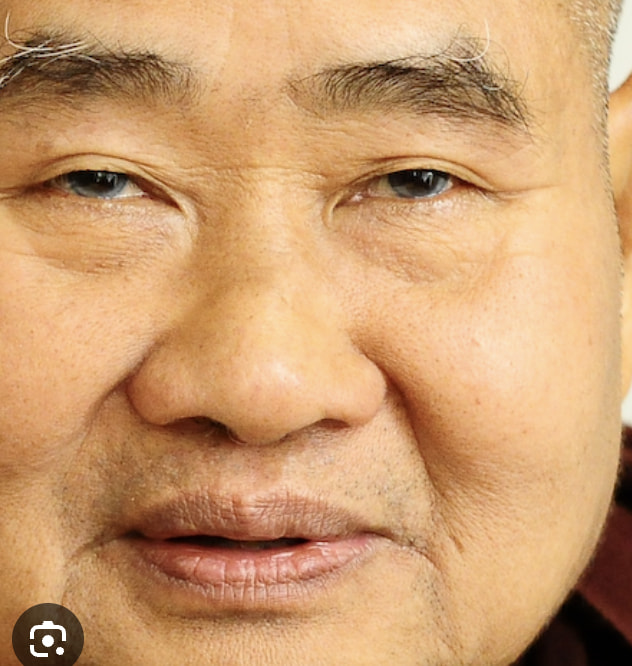
DN30 describes him as ‘abhinīlanetto’, a word with three parts: ‘abhi’ means ‘very’, ‘netto’ means ‘eyed’, and ‘nīla’ is the key word to consider here….
‘nīla’ means, at first glance ‘blue’, therefore ‘abhinīlanetto’ means ‘very blue-eyed’. But Color term - Wikipedia colour terms don’t necessarily map exactly between different languages; the key question is does ‘nīla’ have exactly the same meaning as the English word ‘blue’ or can it also mean ‘dark’.
Take the Irish word ‘gorm’. It also is usually translated ‘blue’, but it is not equivalent to the English word. Here’s an example of it meaning ‘black’: https://www.youtube.com/watch?v=0vCbROmg6oc
So if ‘nīla’ has a semantic catchment area closer to Irish ‘gorm’ than English ‘blue’, then ‘abhinīlanetto’ means ‘very dark-eyed’…. I think this might be the case but I’d be interested to hear one of the Pāli speakers here weigh in.
The Wikipedia article on Maudgalyayana Maudgalyayana - Wikipedia says “Sri Lankan scholar Karaluvinna believes that originally a dark skin was meant, not blue”, so there’s at least one other case of the words for ‘blue’ and ‘dark’ getting muddled/disputed between translators.
Setting aside DN30, there’s also the historical question of is it plausible that someone from the Shakya Republic had blue eyes? Shakya - Wikipedia says they were “of “mixed origin” (saṃkīrṇa-yonayaḥ), consisting primarily an indigenous lineage with a possible minority of Aryan ancestry”
In terms of kasina.. it is different and often used for hair.
However, it is possible to be blue eyes. People think it would be impossible for an Indian to have blue eyes. Ven Pa-Auk Saydawgyi has blue eyes.
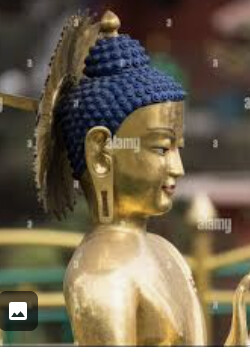
Just realised the same sutta uses the word ‘nīla’ also for his hair! So definitely not equivalent to the English colour-term ‘blue’.
Colour-terms are sorta weird cross-linguistically. Russian has no word equivalent to ‘blue’; many languages have no word for ‘orange’. Colours are hard for translators.
Yes, it is dark brown and hair (not blue) is used for that color kasiṇa in the Pa-Auk method.
I was, however, just pointing out that skepticism can be proven wrong with eye color.
Some Nepalese Buddhas have blue hair, taking that description literally. It can be either and is extremely highly likely that it is defined as both in the commentaries if Ven. Pa-Auk teaches this way.