Critique: Sujin School's Use Of Motion for Air Element

In this video at this timestamp, it seems that “motion” is used for vāyo (air element). It is best to use air element instead of “motion.” Kalāpas do not move. There is no time for movement. The characteristic is pushing, pulling, and supporting. I have partially discussed this with @RobertK, and he can post his initial comments here: Then we can discuss: Video Below:

2 Likes

Thanks Venerable.

It is an important point - we tend to think “we” are moving but of course rupas arise and pass away so quickly that there is no possibilty of the same rupa arising and lasting for even a split second, as you indicate above.

1 Like

Here is the definition from the Vibhanga:Vibhanga

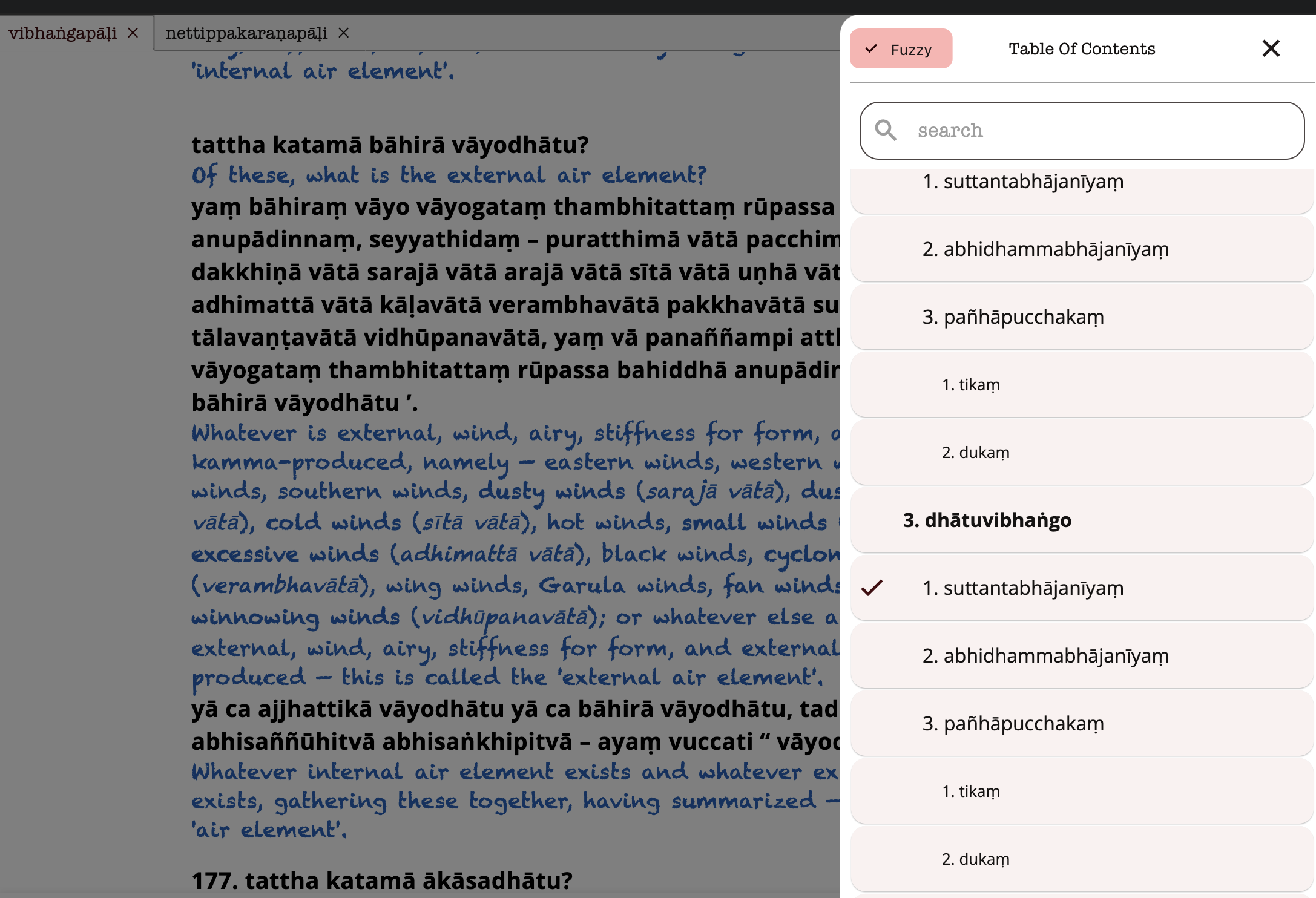
Therein what is the element of motion[(vāyo-dhātu]? The element of motion is twofold: (It) Is internal; (it) is external. Therein what is internal element of motion? That which is personal, self-referable, air, airy, the inflation of form, internal, grasped. For example; ascending wind; descending wind; abdominal wind; intestinal wind; wind circulating in the limbs; knife-like wind; razor-like wind; rending wind; in-breath or out-breath; or whatever else there is, personal, self-referable, air, airy, the inflation of form, internal, grasped. This is called internal element of motion.

Therein what is external element of motion? That which is external, air, airy, the inflation of form, external, not grasped. For example; easterly winds; westerly winds; northerly winds; southerly winds; dusty winds; dust-free winds; cold winds; hot winds; gentle winds; strong winds; black winds (i.e. winds accompanying black clouds); high altitude winds; wing winds (i.e. air motion caused by birds” wings); supanna winds (i.e. air motion caused by the mythical garula bird); winds from a circular palm-leaf (fan); wind from a fan; or whatever else there is, external, air, airy, the inflation of form, external, not grasped. This is called external element of motion. That which is internal element of motion and that which is external element of motion; (taking) these together collectively and briefly, this is called the element of motion. (4)

I often use the relationship of pixels on a screen. Even though nothing moves with a still picture, like the majority of the screen while I type this message, pixels are turning on and off with the refresh rate of the video screen. In the same way when a video is playing of a monk doing walking meditation, it is merely pixels turning on and off and tracking in a new position. Arising and passing kalapas are very similar in the 3D space.

1 Like

I think you forgot to look at the title of the chapter: We can tell very clearly that this is from the suttas.

Third Chapter dhātuvibhaṅgo
suttantabhājanīyaṃ Sutta Exposition

Either you knew, or this is the fault of quick searching without knowing the surrounding material.

It is always good to read where this saying “they do not move” comes from. (Good ol’ Tipitaka Pali Reader aisearch pulled this search result for me). You can find the actual text in this TPR link here:

desantaruppattiyeva cettha calanaṃ uppannadesato kesaggamattampi dhammānaṃ saṅkamanābhāvato.
And here, movement is simply arising in a different location, because there is no migration of phenomena even as much as a hair’s breadth from the place where they arose.

itarathā nesaṃ abyāpārakatā, khaṇikatā ca na siyā.
Otherwise, they would not be without activity or be momentary.

desantaruppattihetubhāvoti ca yathā attanā sahajarūpāni heṭṭhimajavanasamuṭṭhitarūpehi patiṭṭhitaṭṭhānato aññattha uppajjanti, evaṃ tehi saha tattha uppattiyevāti daṭṭhabbaṃ, ettha pana cittaje calite taṃsambandhena itarampi calati nadīsote pakkhittasukkhagomayapiṇḍaṃ viya.
Regarding the phrase “acting as a cause for arising in another location,” it should be understood to mean that the co-arisen material phenomena arise in another place together with the wind element, just as the material phenomena produced by the preceding impulsions arise elsewhere than where they were established. Here, when the thought-born materiality moves, other types also move due to their connection with it, like a lump of dried cow-dung thrown into a river current.

tathā calayituṃ asakkonti yopi paṭhamajavanādisamuṭṭhānavāyodhātuyo viññattivikārasahitāyeva yena disābhāgena ayaṃ abhikkamādīni pavattetukāmo, tadabhimukhabhāvavikārasambhavato.
Even the wind elements produced by the first impulsion and so on, which are unable to move the body in that way, are still accompanied by the distinctive mode of intimation, because the distinctive mode of facing a particular direction arises according to the direction in which one wishes to perform movements like stepping forward.

evañca katvā manodvārāvajjanassapi viññattisamuṭṭhāpakattaṃ vakkhaṃ.
In this way, he will state that the mind-door advertence also has the capacity to produce intimation.

Another quote is here. It is interesting because when I spoke of this last October 4th, discussion, I mentioned the small bubbles when a pot of water is getting ready to boil, or boiling sugar crystals.

sīlakkhandhavaggaṭīkā 247-248

tatthāti tasmiṃ abhikkamane, tesu vā vuttesu uddaraṇādīsu koṭṭhāsesu.
“In that” (tatthāti) refers to that going forward, or to those previously mentioned sections such as the lifting [of the foot].
uddharaṇeti uddharaṇakkhaṇe.
“In lifting” (uddharaṇe) means at the moment of lifting.
rūpārūpadhammāti uddharaṇākārena pavattā rūpadhammā, taṃsamuṭṭhāpakā arūpadhammā ca.
“Form and formless phenomena” refers to the material phenomena occurring by way of lifting, and the immaterial phenomena that generate them.
atiharaṇaṃ na pāpuṇanti khaṇamattāvaṭṭhānato.
“They do not reach moving beyond” (atihāraṃ na pāpuṇanti) because they only exist for a moment.
tattha tatthevāti yattha yattha uppannā, tattha tattheva.
“In that very place” (tattha tattheva) means wherever they have arisen, there and only there [do they cease].
na hi dhammānaṃ desantarasaṅkamanaṃ atthi.
Indeed, there is no movement of phenomena from one location to another.
‘‘ pabbaṃ pabba ’’tiādi uddharaṇādikoṭṭhāse sandhāya sabhāgasantativasena vuttanti veditabbaṃ.
One should understand that the phrase “joint by joint,” and so on, was said with reference to the sections such as lifting, by way of the continuous stream of similar phenomena.
atiittaro hi rūpadhammānampi pavattikkhaṇo, gamanassādīnaṃ, devaputtānaṃ heṭṭhupariyena paṭimukhaṃ dhāvantānaṃ sirasi pāde ca bandhakhuradhārā samāgamatopi sīghataro.
For the moment of occurrence of material phenomena is very fast, faster than the speed of a stream of arrows shot by skillful devas running towards each other, even when they are attached to their heads and feet.
yathā tilānaṃ bhajjiyamānānaṃ paṭapaṭāyanena bhedo lakkhīyati, evaṃ saṅkhatadhammānaṃ uppādenāti dassanatthaṃ ‘‘ paṭapaṭāyantā ’’ti vuttaṃ.
Just as the breaking of sesame seeds being cooked is observed by the crackling, so too, in order to show [the breaking up] of conditioned phenomena by their arising, the word “crackling” (paṭapaṭāyantā) was said.
uppannā hi ekantato bhijjantīti.
For having arisen, they definitely break up.

Here is another

visuddhimaggamahāṭīkā (du) p 33

yattha yattha ca dhammā uppajjanti, tattha tattheva bhijjanti.
Wherever phenomena arise, they break up right there.
natthi desantarasaṅkamanaṃ, na ca sabhāvo aññathā hotīti.
There is no moving to another place, nor does the nature of a phenomenon become otherwise.

p100 same book

vāyodhātuyā vikārabhāvato pariyāyena viññatti kāyavipphandanahetubhāvapaccupaṭṭhānā vuttā.
Because of the alteration-nature of the air-element that is the cause for bodily movement, it is stated by a method of exposition that intimation is “manifested as the cause for bodily movement”.
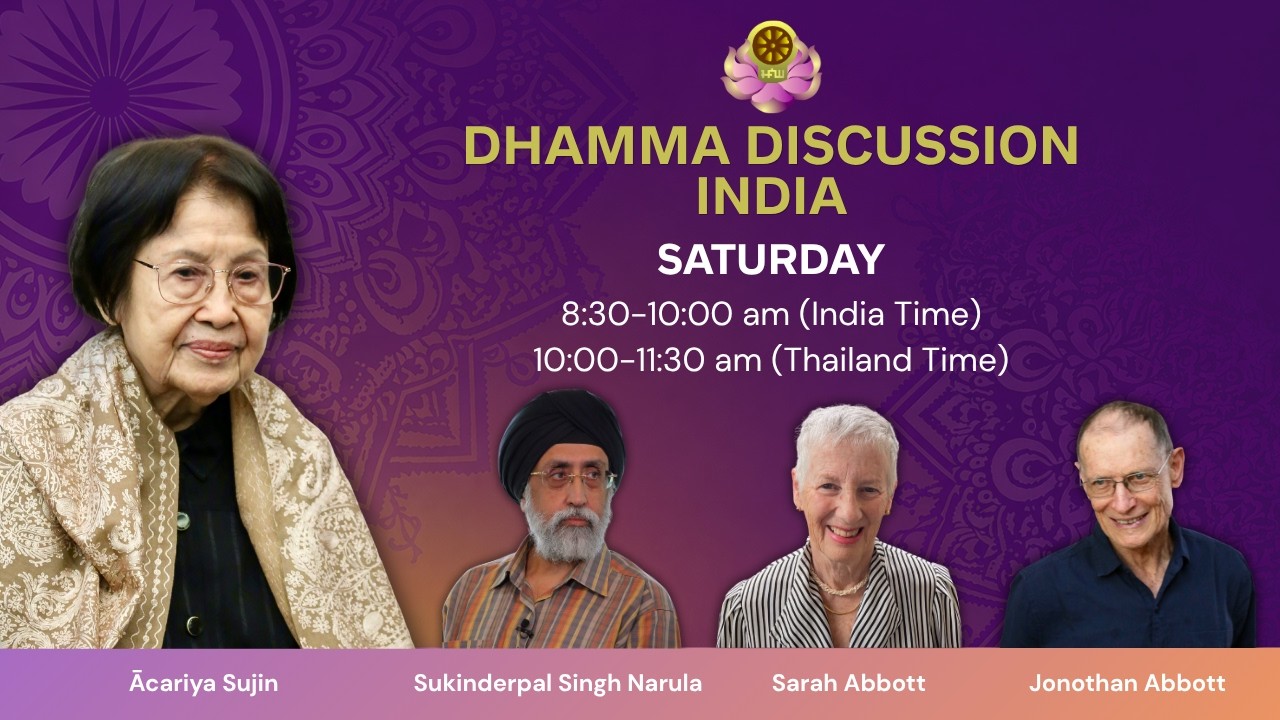
1 Like

Dear Venerable

this was a quote from the Vibhanga, the second book of the Abhidhamma . The Vibhanga throughout uses the sutta analysis and Abhidhamma analysis. I love this as it anchors it in both - it shows that it is the same teaching in the sense of it is from the Buddha.

Especially these diffferent analysis are helpful in the section on the Dependent Origination, I find. But throughout it is most beneficial .

yes very nice. Nina van gorkom writes:

Physical Phenomena

As to the element of wind (in Pāli: vāyo dhātu) or motion, the Visuddhimagga (XI, 93) defines it as follows⁸:

“… The air element (wind) has the characteristic of distending. Its function is to cause motion. It is manifested as conveying⁹.”

We may believe that we can see motion of objects but the rūpa which is motion cannot be seen. What we mean by motion as we express it in conventional language is not the same as the element of wind or motion. We notice that something has moved because of remembrance of different moments of seeing and thinking of what was perceived, but that is not the experience of the rūpa which is motion.

This rūpa can be directly experienced through the bodysense. When we touch a body or an object with a certain resilience, the characteristic of motion or pressure may present itself. These are characteristics of the element of wind. It can also be described as vibration or oscillation. As we read in the definition, the function of the element of wind is to cause motion. It is, for example, a condition for the movement of the limbs of the body. However, we should not confuse pictorial ideas with the direct experience of this rūpa through the bodysense.

⁸ See also Dhammasaṅgaṇī §648 and Atthasālinī II, Book II, Part I, Ch III, 332.

⁹ Taking from one point to another, Visuddhimagga XI, 93. The commentary explains: “Conveying is acting as cause for the successive arising at adjacent locations of the conglomeration of elements”

It was from the suttanta exposition in the Abhidhamma text. It should have been clear in context what I said. Often it mentions suttanta method and Abhidhamma method.

yes perfect :folded_hands:

1 Like

One point I can make is that sometimes it is best to stick with the pali (vayo-dhatu in this case). But even then we tend to conceptualize what it is when in fact vayo-dhatu is here right now, even if we don’t name it.

I have a slight pain in my back: that is the ‘story’ but there are merely elements arising and ceasing. There is a mix too, as it is happening so fast: sometimes hardness, sometimes pressure or heat seem apparent; but there are moment of painful feeling also that are different again.. It is huge mix but by way of the teaching little by little their nature may be known.. The teachings, sutta and Abhidhamma - so absolutely true- and thus when we read about vayo dhatu it helps just that little bit to know them.

1 Like

We should understand that when it comes to the suttas or 32 or 42 parts:

  • What we know as “earth” is “earth predominant”.
  • What we know as “water” is “water predominant”.
  • What we know as “fire” is “fire predominant”.
  • What we know as “air” is “air predominant”.

However all four elements are present all of the time.
These four conditions are present because they arise together, they are dependent upon each other, when one is present, all are present, and when one is present all must be present.

  1. Sahajāta (Conascence)
  2. Nissaya (Support/Dependence)
  3. Atthi (Presence)
  4. Avigata (Non-Disappearance)

6. sahajātapaccayoti – cattāro khandhā arūpino aññamaññaṃ sahajātapaccayena paccayo.
6. Co-nascence condition: The four immaterial aggregates are mutually related to one another by co-nascence condition.
cattāro mahābhūtā aññamaññaṃ sahajātapaccayena paccayo.
The four great elements are mutually related to one another by co-nascence condition.

— paṭṭhānapāḷi(paṭhamo bhāgo) › 2. paccayaniddeso (Patthana 1.1), p. 5

7. aññamaññapaccayoti – cattāro khandhā arūpino aññamaññapaccayena paccayo.
7. Mutuality condition: The four immaterial aggregates are related to one another by mutuality condition.
cattāro mahābhūtā aññamaññapaccayena paccayo.
The four great elements are related to one another by mutuality condition.

— paṭṭhānapāḷi(paṭhamo bhāgo) › 2. paccayaniddeso (Patthana 1.1), p. 5

cattāro mahābhūtā aññamaññaṃ nissayapaccayena paccayo.
The four great elements are mutually related to one another by dependence condition.

— paṭṭhānapāḷi(paṭhamo bhāgo) › 2. paccayaniddeso (Patthana 1.1), p. 5

cattāro mahābhūtā aññamaññaṃ atthipaccayena paccayo.
The four great elements are mutually related to one another by presence condition.

— paṭṭhānapāḷi(paṭhamo bhāgo) › 2. paccayaniddeso (Patthana 1.1), p. 8

cattāro mahābhūtā aññamaññaṃ avigatapaccayena paccayo.
The four great elements are mutually related to one another by non-disappearance condition.

— paṭṭhānapāḷi(paṭhamo bhāgo) › 2. paccayaniddeso (Patthana 1.1), p. 9

What you are talking about is better described by Zeno’s paradoxes.

Briefly continuous motion is impossible because to get to another point if a thing would have to travel between infinite points inbetween which take an infinite amount of time and motion would be impossible. For something to move it needs to travel half way to the next point first and then halfway to the the half way of that and so on and if each movement through space was continuous it needs to travell through infinite points in between. Hence motion is impossible. Only a quantum system can have motion. Just as in an atom an electron can be raised in a shell to the next level without going in between. Which is how things move in atomic physics. Quantum leaps between shells. There is also an elementary moment of time it is not continuous and moves in quantum leaps. Which means it is not infinitely divisible.

Having said that though everytime you move a limb or walk etc this is the air element supporting and pushing that causes motion. So calling the wind element motion is no big deal because all motion in the body is a predominance of air element and our mind percieves it as motion.

Yes, good point I think.

The Summary of the Topics of Abhidhamma and Exposition of the Topics of Abhidhamma Abhidhammatthavibhāvinī by Sumaṅgala, Translated by R. P. Wijeratne and Rupert Gethin Oxford: Pali Text Society, 2002:

p.218

Wind (vāyo) is that which blows (vāyati); by being the cause of their arising in a different place, it moves a collection of elements.

1 Like