In Cullavagga, there are many places where it is mentioned that by doing a certain action, there is offense of wrong-doing. Example:
Now at that time the group of six monks lay down to sleep on high couches. People touring the lodgings, having seen them . . . spread it about, saying: “Like householders who enjoy pleasures of the senses.” They told this matter to the Lord. He said: “Monks, you should not lie down to sleep on high couches. Whoever should (so) lie down to sleep, [149] there is an offence of wrong-doing.”
What does wrong-doing mean in this context? Is there punishment or bad kamma as a result of committing the offence.
It is called a dukkaṭa-āpatti.
The “Protestants” believe you do not need to confess since pācittiya means to confess.
In Orthodox Theravāda, we should confess these.
A dukkaṭa-āpatti can break your concentration if intentional. I am not sure if it will break concentration when unintentional. But it is still an offence. In Vinaya classes, we count how many offences one can accumulate.
Confession clears them.
When a monk uses money and buys stuff, those objects are not allowed and need to be forfeited. For another using those objects, it is a dukkaṭa. That is why monks who follow strict Vinaya avoid monasteries that use money. They are “untouchable,” and if you touch them, it is a dukkaṭa. Often we say, one offence for every footstep. The counting is to let you feel how wrong it is. If you care, you don’t do this. Obviously, sometimes it is not avoidable for paying respect to Buddhas or senior monks, etc.
The Protestants who follow Vinaya sometimes care, sometimes don’t.
“It is just a dukkaṭa” is often said by them. Ajahn Thanissaro often complains about them, although he does not mention them in BMC I and BMC II.
Often a dukkaṭa is when one of the several factors is breached for a full pācittiya offence, but not all factors. Often it is noted as a dukkaṭa.
Sekhiya rules are also dukkaṭa if broken.
There are also things that are small or large which fit that category.
Wearing lay clothes, like a shirt, is a dukkaṭa.
Going about naked is also the same (a little more serious).
For saṅghādisesa offences, if there are two steps removed, it is often a dukkaṭa.
If you are one step away, it is a thullaccaya (grave offence).
Thank you for sharing a detailed explanation on this Bhante.
Are monastics trained to memorize all the rules in Cullavagga? Or staying in a monastery which follows Vinaya strictly makes it easy to protect these rules?
I think you are often given an example and you have to know if it is allowed or not. You might be asked to memorize allowed items. Most are recognizing what is allowed and not allowed as it comes, so you can navigate your way. Not many monks even memorize the Pāṭimokkha, although it is very clear that to be an independent monk, you have to do a lot more than that.
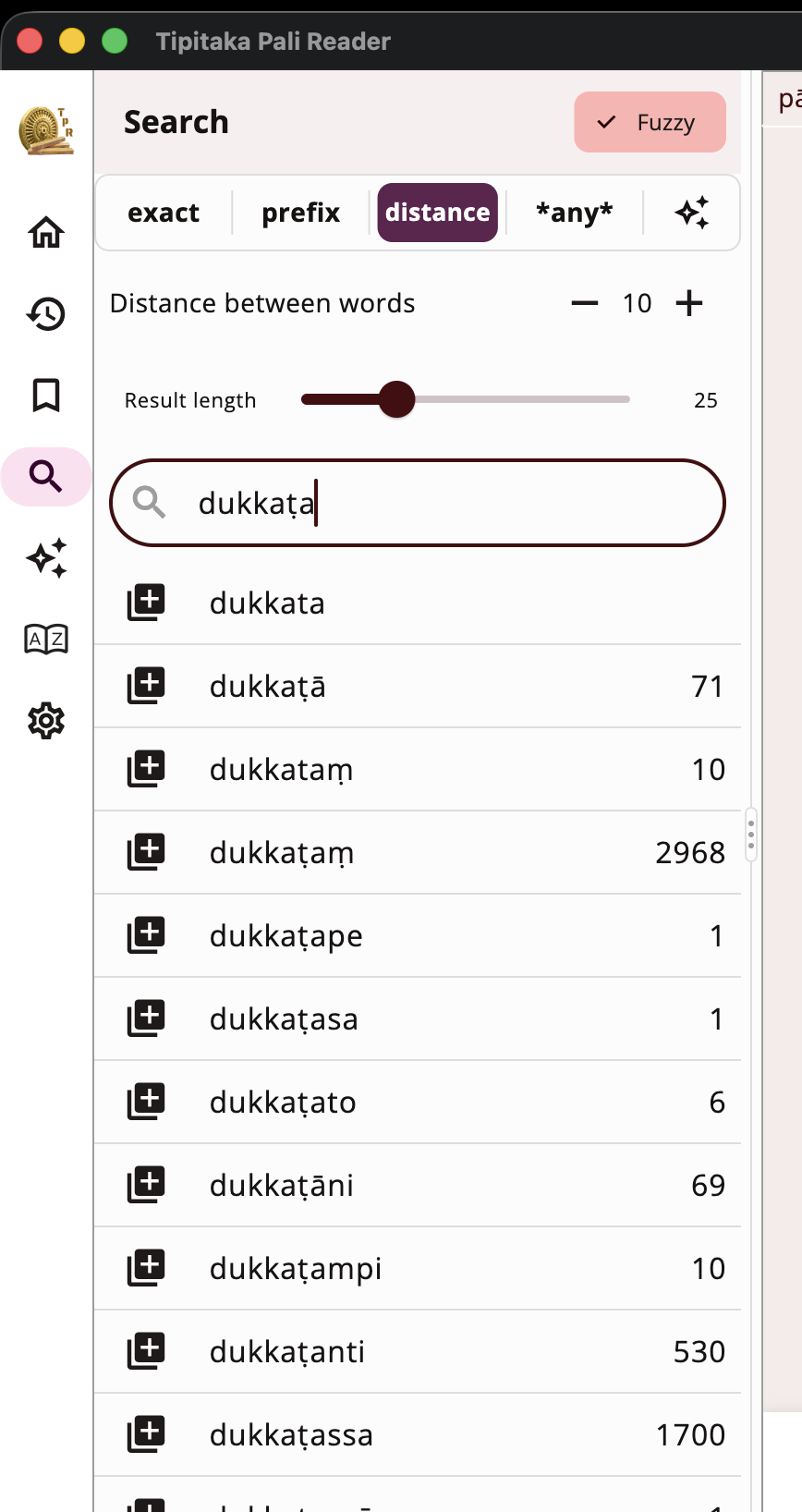
If you open Tipitaka Pali Reader and you search for dukkaṭa in the “distance” search,
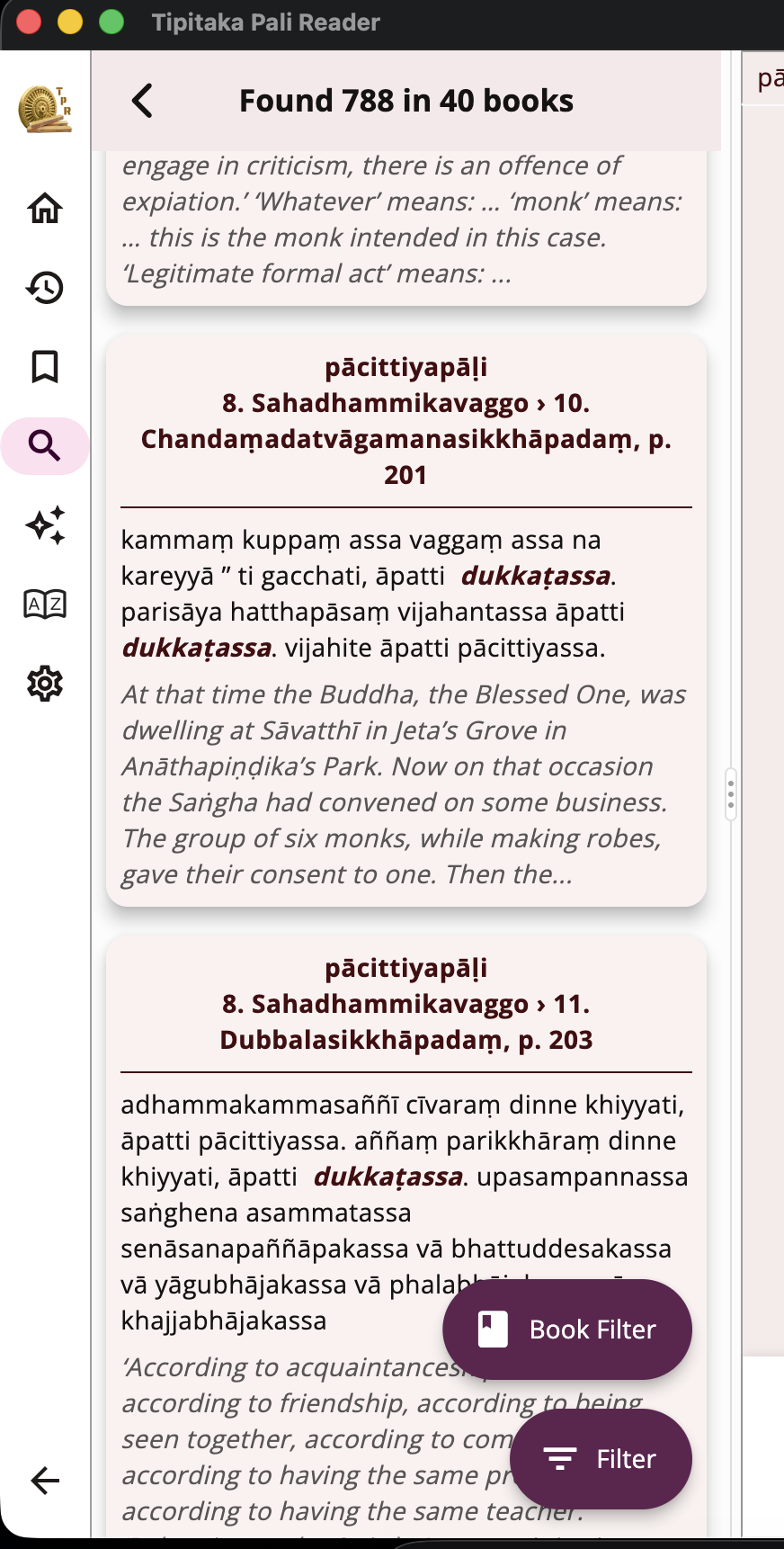
You will find many examples. How can I list them all?
You will see this: